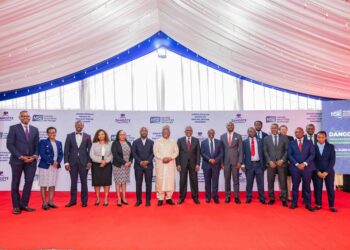
Trade-enabling infrastructure across Africa is improving while business confidence continues to strengthen, according to the latest edition of the Standard Bank Africa Trade Barometer (ATB), with Kenya emerging as a key driver of trade integration in East Africa.
The fifth issue of the ATB, released by Standard Bank Group, surveyed firms across 10 African markets — Angola, Ghana, Kenya, Mozambique, Namibia, Nigeria, South Africa, Tanzania, Uganda and Zambia — which together account for about 68 percent of Sub-Saharan Africa’s GDP.


The report shows that all major infrastructure indicators improved simultaneously for the first time since the barometer’s launch in 2022, signalling growing investment in logistics, digital trade systems and transport networks across the continent.
Philip Myburgh, Head of Trade for Business and Commercial Banking at Standard Bank Group, said businesses reported improvements across power supply, telecommunications, roads, railways, ports and digital border systems.
“These developments reflect growing investment in logistics capacity and digital trade facilitation across the continent,” he said.
Kenya at the Centre of East Africa’s Trade Momentum
The report highlights East Africa as the strongest-performing sub-region, recording a 10-percentage-point increase in export activity, with Kenya playing a pivotal role in the region’s growing integration.
Recent reforms between Kenya and Uganda — which now treat goods originating in Kenya as intra-regional transfers rather than imports — have reduced administrative barriers within the East African Community.
At the same time, renewed commitments between Kenya and Tanzania to remove non-tariff trade barriers are helping improve cross-border trade flows that had previously slowed regional commerce.
Combined with upgrades along key transport corridors linking East Africa’s major trade routes, the reforms are reducing border delays, improving logistics predictability and strengthening supply chain reliability.
For businesses operating in the region, the improvements are translating into lower transaction costs and greater confidence in expanding cross-border operations.
Business Confidence and Growth Outlook Improving
Across the 10 markets surveyed, economic growth is projected to reach 4.3 percent in 2026, supported by moderating inflation in most economies and improving external debt positions.
The report also shows business confidence rising to an index score of 65, with most firms expecting stronger turnover and more stable trading conditions in the coming year.
Commodity strength — particularly in gold, platinum and copper — is also supporting exporters and improving foreign exchange earnings across several African markets.
AfCFTA Driving Regional Trade
Awareness of the African Continental Free Trade Area (AfCFTA) has reached 50 percent among surveyed firms, with businesses citing easier movement of goods, wider market access and increased industrialisation opportunities.
Early AfCFTA shipments are already demonstrating operational progress as more countries align customs and regulatory systems to facilitate trade.
Digital Payments Transforming Cross-Border Trade
The barometer also highlights the rapid digitalisation of cross-border transactions.
Digital payment systems now facilitate 78 percent of cross-border sales and 79 percent of purchases, driven by bank payment rails, mobile money integration and the adoption of the Pan African Payment and Settlement System (PAPSS), which allows faster settlement in local currencies and reduces reliance on hard currency.
Shift Away from US Trade Partners
The survey also points to changing global trade dynamics, with firms reporting declining engagement with US trade partners amid evolving tariff policies affecting access to the American market.
In contrast, engagement with Asian markets, particularly China, is rising as businesses seek competitive pricing, greater product variety and more reliable supply chains.
Climate Risks Persist
Despite the positive outlook, climate change remains a growing challenge for African businesses.
About 38 percent of firms reported shifts in demand linked to climate impacts, while 32 percent said climate pressures were affecting productivity, highlighting the need for more resilient infrastructure and production systems.
Outlook
The report concludes that Africa’s trade outlook is improving as infrastructure investment, macroeconomic stability and regional integration gather momentum.
“As AfCFTA implementation deepens and more countries harmonise customs, regulatory frameworks and logistics platforms, Africa’s ability to expand industrial capacity, scale regional value chains and strengthen competitiveness is set to accelerate,” Myburgh said.