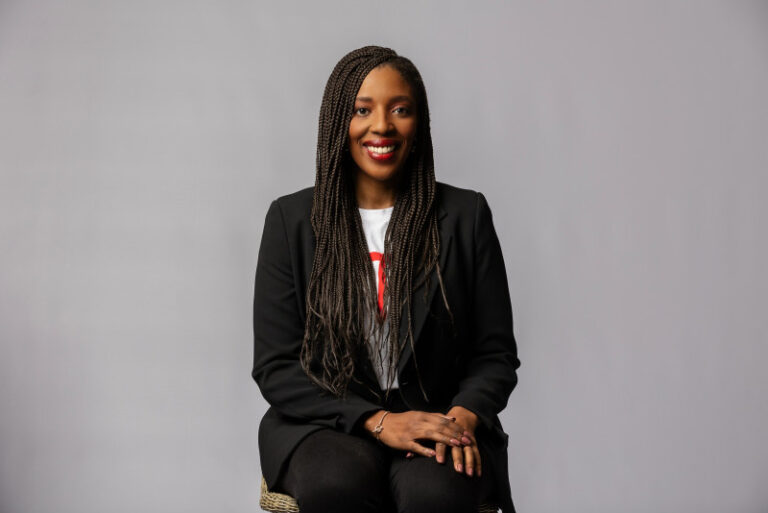
As the United States imposes higher tariffs with global ramifications, African Development Bank Group (www.AfDB.org) President Dr. Akinwumi Adesina has warned that these measures could trigger significant economic disruptions across Africa, affecting numerous nations and accelerating a strategic shift in global partnerships.


In an exclusive interview with CNN’s Christiane Amanpour, Dr Adesina revealed that 47 of Africa’s 54 countries will be impacted directly by the new U.S. trade policies, with potential declines in export revenues and foreign exchange reserves.
“When those currencies weaken, two things will happen: first, you will find that most of these countries are import-dependent. So, you’re going to find that high inflation becomes a problem,” said Adesina. “And secondly, you find that the cost of actually servicing a lot of their debt, which is foreign currency debt, but in local currencies, is going to get worse.”
Almost all African countries have been hit by higher tariffs announced by the Trump administration, with at least 22 nations facing up to a whopping 50 percent for almost all their products. Among the hardest hit countries are Lesotho, Madagascar, Mauritius, Botswana, Angola, Algeria, and South Africa.
The impacts of these higher tariffs are further exacerbated by significant cuts to USAID programs, which have already begun affecting access to essential medical supplies and humanitarian services in many countries, raising serious concerns about the future trajectory of U.S.-Africa relations.
Africa’s Strategic Response
Despite the challenges, Adesina emphasized that Africa cannot afford a trade confrontation with the United States, noting that the continent accounts for only 1.2 percent (approximately $34 billion) of America’s global trade—with a trade surplus of just $7.2 billion.
Instead, he proposed a pragmatic three-point strategy for the continent: Engage the U.S. through flexible and constructive trade negotiations, diversify export markets to reduce dependency on any single partner, and accelerate the African Continental Free Trade Area implementation to unlock the potential $3.4 trillion market.
He stressed the need to expand Africa’s domestic market and boost domestic savings to develop consumption as a bigger share of its GDP, leveraging its massive population growth. More importantly, the continent must take advantage of the increasing external interest in its natural resources, such as cobalt and lithium, to negotiate a better trade and investment deal.
Addressing speculation that Africa may shift more decisively toward China in response to the higher U.S. tariffs, Adesina dismissed any notion of binary alignment. “U.S is a key ally of Africa—and so is China,” he stated. “Africa is building bridges, not isolating itself.”
He stressed that Africa seeks balanced, transparent, and mutually beneficial partnerships with all major global players, including the U.S., China, the European Union, and the Gulf states. “I think at the end of the day, we want to make sure that whatever deals that are being done with Africa are transparent, fair, equitable, and led by Africa and in Africa’s interests,” Adesina reiterated.
Beyond Aid: Driving Africa’s Self-Reliance
Dr. Adesina, who concludes his second and final term as president of the Bank in September, firmly rejected the long-standing paradigm of foreign aid dependency. “The era of aid as we’ve known it is completely gone,” he declared, calling instead for bold investments in domestic resource mobilization, infrastructure, and value-added industrialization.
He said aid must be turned into concessional financing to allow multilateral financial institutions like the African Development Bank to do more for the continent by mobilizing more private capital to develop and derisk projects.
While Africa represents nearly 20 percent of the global population and under three percent of global GDP, the Bank Group chief pointed to a resilient and transformative growth narrative: ten of the world’s twenty fastest-growing economies are in Africa.
He highlighted flagship initiatives under the African Development Bank’s “High 5” agenda that have impacted more than 565 million people through investments in power, food security, industrialization, regional integration, and initiatives to improve the quality of life of the people of Africa.
Over the past decade, the African Development Bank has invested more than $55 billion in infrastructure to bolster economic integration across Africa, alongside other critical investments to drive inclusive growth. It is by far the largest financier of infrastructure across Africa.
Adesina also cited the great potential of the Mission 300 project, a joint initiative by the World Bank and the African Development Bank to connect 300 million people in Africa to electricity by 2030. “Because without electricity, what can you do? You can’t industrialize, you can’t add value, you can’t be competitive in the dark,” he said.
He highlighted the achievements of the Africa Investment Forum, launched in 2018 by the Bank and eight other partners, saying it has since mobilized more than $225 billion in investment interest to the continent. The Forum is a multi-stakeholder, multi-disciplinary platform that advances projects to bankable stages, raises capital, and accelerates deals to financial closure.
Adesina believes that despite its challenges, Africa is the largest greenfield investment destination in the world, and it remains “the investor’s dream.”
“We got hydropower. We have a massive youth population that can become the labor force of the world. Sixty-five percent of the arable land left in the world to feed almost 9.5 billion people by 2050 is in Africa, so what Africa does with it will determine the future of food in the world,” he affirmed.
Distributed by APO Group on behalf of African Development Bank Group (AfDB).
Contact:
Communication and External Relations Department
media@afdb.org