
- The continent recorded an estimated average GDP growth of 4.4 percent in 2025, with 22 economies posting rates above 5 percent.
- In 2026, Africa is projected to grow at 4.2 percent, despite heightened geopolitical tensions and global supply shocks.
- Central Africa is expected to see growth rising to 3.8 percent in 2026 from 3.6 percent in 2025, buoyed by sustained high oil prices
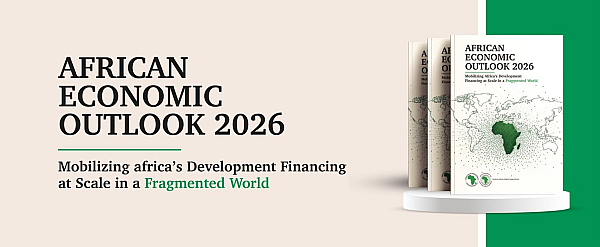
Africa’s economies are projected to grow at 4.2 percent in 2026, moderating slightly from 4.4 percent in 2025, before rebounding to 4.4 percent in 2027. The findings of the 2026 African Economic Outlook, released Tuesday at the African Development Bank Group Annual Meetings in Brazzaville (www.AfDB.org), underscore the continent’s continued resilience in the face of geopolitical tensions, tighter global financial conditions, and supply chain disruptions.


According to the Bank’s flagship report, Africa’s growth in 2025 was supported by improved macroeconomic management, stronger agricultural output, elevated commodity prices, and ongoing structural reforms. The continent remains among the world’s fastest-growing regions, with 22 countries projected to grow above 5 percent in 2025.
Published under the theme, Mobilizing Africa’s Development Financing at Scale in a Fragmented World, the report notes that sustaining faster, inclusive and more resilient growth would require a decisive shift towards mobilising and deploying capital at scale. This includes strengthening domestic resource mobilisation, deepening and integrating financial systems, expanding capital markets, and enhancing African agency in global finance.
Mixed Regional Outlook
- East Africa is expected to remain the continent’s fastest-growing region, though growth is projected to ease from 6.6 percent in 2025 to 5.9 percent in 2026, as rising energy and import costs linked to Middle East disruptions take their toll. A rebound to 6.4 percent is anticipated in 2027.
- West Africa is forecast to remain relatively stable, with growth projected at 4.7 percent in 2026, broadly in line with the estimated 4.8 percent for 2025, supported by strong agricultural production and continued infrastructure investment.
- North Africa is expected to grow at 4.0 percent in 2026 compared to 4.4 percent in 2025, reflecting weaker tourism demand from Gulf states, and the broader effects of global supply chain disruptions.
- Central Africa is one of the few regions projected to see an uptick, with growth rising marginally to 3.8 percent in 2026 from 3.6 percent in 2025, buoyed by sustained high oil prices.
- Growth in Southern Africa is expected to remain subdued at 2.1 percent in 2026, from 2.3 percent in 2025, weighed down by weaker mining and agricultural output and higher energy costs.
Downside risks to the outlook remain significant. Inflation is projected to stay elevated at 10.4 percent in 2026, posing continued challenges to macroeconomic stability and growth prospects. Persistent geopolitical tensions, alongside prolonged global supply chain and energy disruptions, could further strain fiscal and external balances through higher energy and fertilizer prices. In addition, financial market volatility and exchange rate depreciations risk amplifying debt and fiscal vulnerabilities, while rising global fragmentation may intensify pressures on external financing flows, including official development assistance.
Closing Africa’s Financing Gap
At the heart of the 2026 AEO report is a stark assessment of Africa’s development financing shortfall: the continent faces an annual gap exceeding $1.3 trillion to meet the Sustainable Development Goals. The African Development Bank attributes the deficit to low domestic resource mobilisation, weak financial intermediation and tightening external financing conditions.
However, it argues, the issue is not only about a lack of resources but also about effectively deploying capital.
With appropriate reforms, Africa could unlock up to $1.43 trillion annually through improved revenue collection, more efficient public investment, staunching illicit financial flows and corruption, deeper capital markets, expanded public-private partnerships, diaspora financing, and better use of natural capital.
Among the key opportunities identified are an estimated $469 billion in additional annual revenues from stronger tax and non-tax mobilisation, alongside roughly $299 billion in potential savings from improved public investment efficiency. Public-private partnerships are highlighted as a powerful lever, with each additional dollar of public investment associated with approximately $1.40 in private investment.
Institutional investors, including pension funds, insurers and sovereign wealth funds, manage around $4 trillion in assets; yet less than 2.7 percent is allocated to infrastructure and productive sectors in Africa, underscoring significant untapped potential.
The report calls for accelerated efforts to strengthen Africa’s financial systems through pan-African banks, integrated capital markets, and innovative instruments such as climate and Islamic finance. A central pillar to this is the New African Financial Architecture for Development (NAFAD) (https://apo-opa.co/4uIta9c), which aims to leverage over $4 trillion in assets within Africa’s financial ecosystem.
The report also highlights the role of the African Credit Rating Agency, launched in January 2026, as an important tool for addressing perceived biases in sovereign risk assessments. While Africa’s stock market capitalisation reached $1.2 trillion in 2024 — nearly sixfold growth over two decades — activity remains concentrated in South Africa, Egypt, Nigeria, and Morocco, pointing to the need for broader market integration.
The report further underscores the importance of advancing continental initiatives, such as the African Financing Stability Mechanism (https://apo-opa.co/4nTP7iR), to ease liquidity pressures, strengthen financial stability, and help African countries manage debt refinancing risks at lower cost.
Click here (https://apo-opa.co/4uAYM06) to read the full report
Distributed by APO Group on behalf of African Development Bank Group (AfDB).
Contact:
Communication and External Relations
media@afdb.org