
The Government of Sierra Leone (GoSL), through the Ministry of Agriculture and Food Security (MAFS) working with its development partners, the Food and Agriculture Organization of the United Nations (FAO) and the World Bank, is implementing a Food Systems Resilience Programme.


This programme seeks to reduce food and nutrition insecurity and enhance the resilience of food systems for vulnerable communities in Sierra Leone. It focuses on rehabilitating Inland Valley Swamps (IVS) and on restocking livestock.
Global Context: Impact of the Russia-Ukraine Conflict on Food Supply Chains and the Lasting Effects of COVID-19
The Russia-Ukraine conflict has significantly disrupted production and supply chains, impacting much of Africa and beyond as the two countries are major global producers of commodities such as oil, gas, cereals, oil grains, and fertilizer. Commodity prices for fuel, wheat, oil palm, and fertilizer have soared. This comes on the back of increases in shipping costs and disruption in the global food supply chain due to the COVID-19 Pandemic, which has kept global food prices higher than pre-pandemic levels.
The government developed a Quick Action Food Security Response Plan (QA-FSRP) outlining the much-needed interventions to support the government’s ability to respond to potential food security threats from the Russia-Ukraine crisis. It focuses on short-term measures, as well as lays the foundation for medium to long-term investment to boost agriculture productivity. This plan outlines both immediate interventions and lays the foundation for medium- to long-term investments to boost agricultural productivity.
Empowering Farmers through Critical Support and Capacity Building
The primary objective of this component is to strengthen the legacy Inland Valley Swamps developed by sister projects that are not being properly utilized to intensify rice and vegetable production by rehabilitation.
One of the key achievements is the provision of critical agricultural inputs coupled with capacity building to all beneficiaries with technical support from the MAFS Agricultural Engineering division to actualize the rehabilitation and cultivation of 850 ha of Inland Valley Swamp across the six districts in Sierra Leone. This approach warranted the timely completion of cultivation across all the beneficiary farming groups with a huge prospect of high yield during harvest.
Another key success story is the introduction of cash-based support to for targeted farmers based on measured work. This approach has empowered farmers to make choices based on their priorities, needs, and preferences, to exercise greater control over their own lives.
Lessons learned and Solutions
One of the programme’s key achievements is the provision of critical agricultural inputs, paired with capacity-building support for all beneficiaries, facilitated by technical assistance from the Agricultural Engineering division of the Ministry of Agriculture and Food Security. This support enabled the successful rehabilitation and cultivation of 850 hectares of Inland Valley Swamp across six districts in Sierra Leone. The intervention has resulted in timely planting across all beneficiary groups, with promising high yields anticipated during harvest. Additionally, the IVS intervention in peri-urban areas like Bo has mitigated the effects of flooding, thanks to reconstructed waterways and drainage canals.
Empowering Farmers with Cash-Based Support
A key component of the programme is the conditional cash transfer model, which gave farmers the freedom to buy what they needed most, whether it is medicine, food, schoolbooks, clothes, or many other things. For instance, in one of the IVS sites in the Daru community after the disbursement of cash to farmers, qualitative evidence showed that farmers who successfully received their cash support used some of it to purchase food, pay school fees, buy mobile phones, and pay hospital bills for their children.
Community Involvement and Stakeholder Engagement for Sustainable Impact
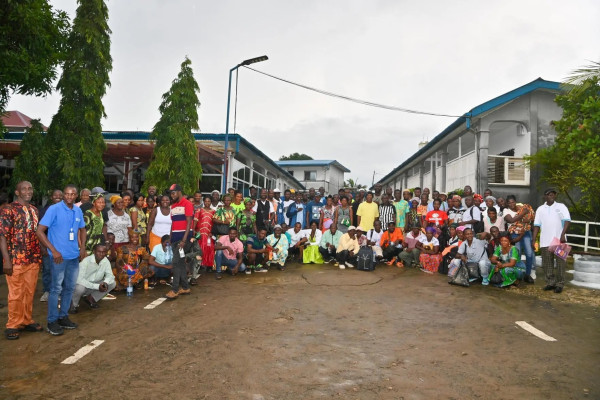
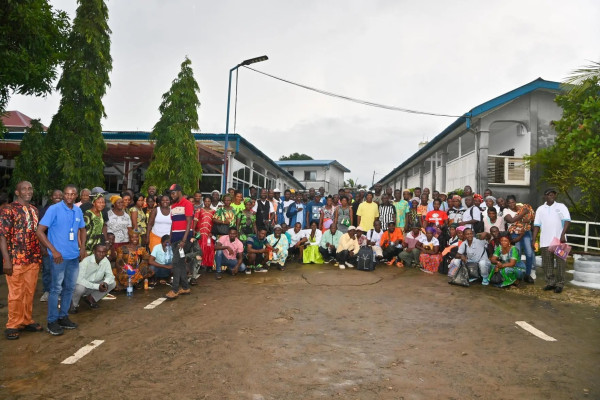
The active involvement of community and chiefdom stakeholders makes it easier to organize and establish any structure and create ownership and sustainability. When community members are given the space to act and are involved in the design of the activity, they bring innovative ideas and demonstrate willingness and commitment to see it through. This is visible in this project through the involvement of the Ministry of Agriculture and Food Security, local community members, and district stakeholders in the formal handing over of agricultural inputs, collaboration in project implementation, and involvement in key decision-making platforms such as the project stakeholder engagement and inception workshops. Women and youth have also demonstrated a strong willingness to learn skills and accept changes.
Recommendations to Peers
Providing training alongside inputs can promote the adoption of sustainable agricultural practices, leading to long-term environmental benefits. Additionally, the involvement of government technical staff in monitoring and training beneficiaries during the IVS rehabilitation and cultivation exercise proved highly valuable. These staff members are expected to maintain a consistent presence in the communities for ongoing monitoring after the project concludes, ensuring continuity.
Furthermore, the use of a community-based model, in which beneficiary farming groups were actively involved in the rehabilitation and cultivation of IVS paddy fields is a clear testament to the sustainability of the project.
Distributed by APO Group on behalf of Food and Agriculture Organization of the United Nations (FAO): Regional Office for Africa.