Aliko Dangote says Africa’s economic future will be decided less by promises of potential than by whether its own investors are willing to take risks on the continent.
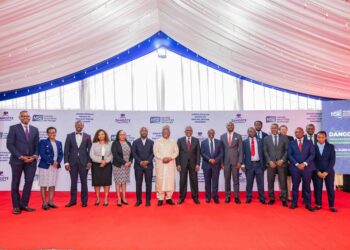
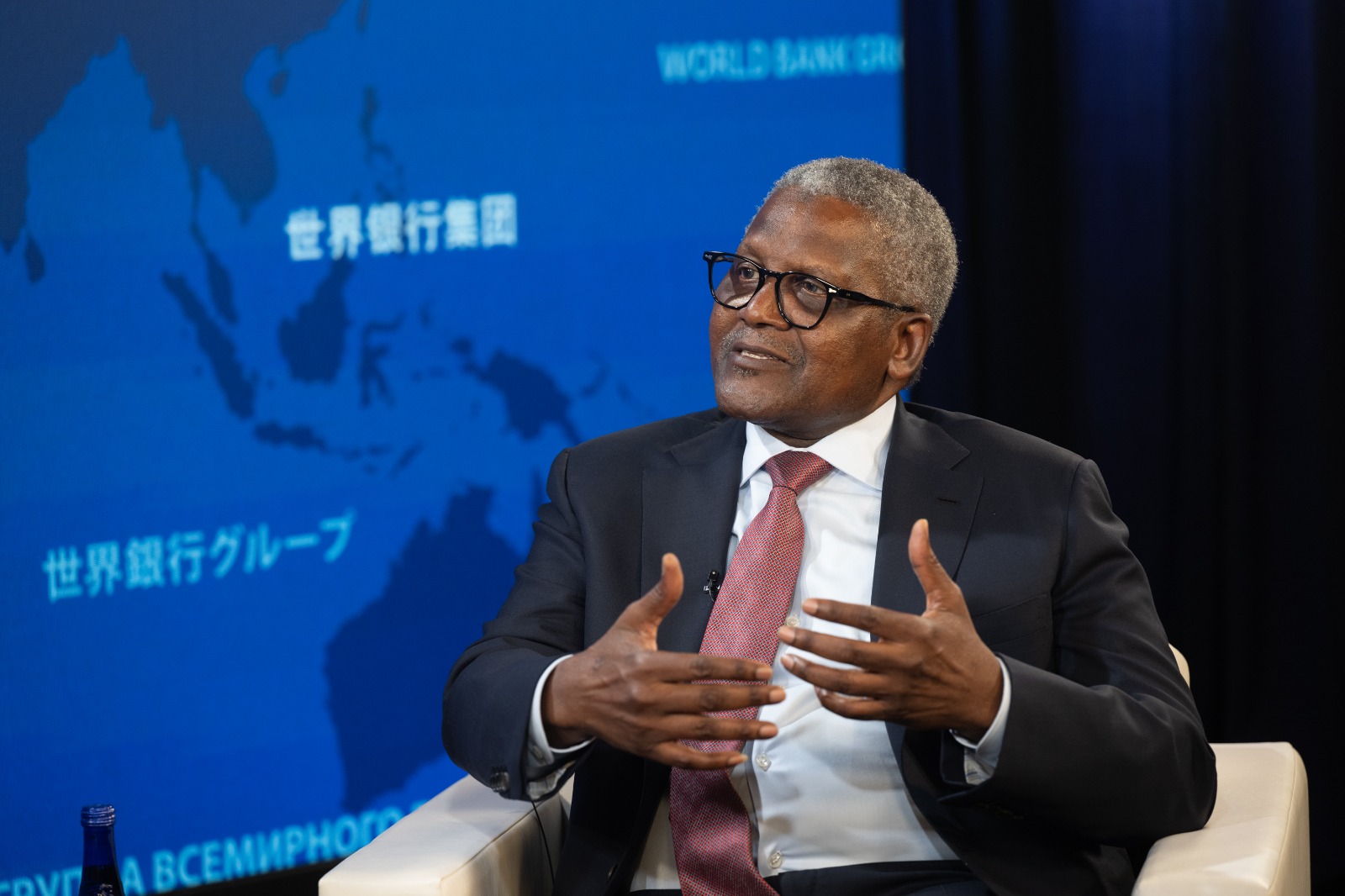
In a wide-ranging conversation with International Finance Corp. Managing Director Makhtar Diop, the Nigerian billionaire industrialist laid out an agenda spanning oil refining, fertilizer, power, ports, agriculture and water infrastructure. His central message: Africa will not attract the scale of capital it needs until Africans first demonstrate confidence in their own markets.

“We will open Africa by demonstrating that we believe in Africa, by investing our money in Africa,” Dangote said. “If I don’t invest my own money, I can never go to any conference and convince people that Africa is a good place to come and invest.”
The exchange, recorded for IFC’s Trendlines platform, comes as African governments and development institutions are searching for ways to accelerate industrialization, deepen regional trade and create jobs for a rapidly growing population. Diop framed Dangote’s career as evidence that private capital can move beyond diagnostics and deliver large-scale projects in sectors long viewed as too difficult.
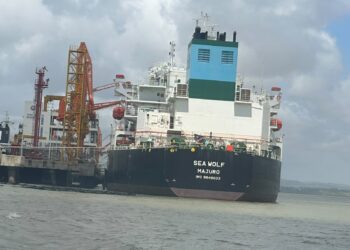
Dangote pointed to the group’s refinery in Nigeria as the clearest example. The facility, which he said cost more than $20 billion, was built in a country that had long exported crude while importing refined fuels. He said the refinery has tested at 661,000 barrels a day and has been stable at 650,000 barrels a day for the past two months.
“For Africa to develop, some of us, we must take that risk,” he said.
The industrialist said the project also changed his own sense of what was possible. Before starting the refinery, he said, he had never seen crude oil and had avoided the sector because of its reputation in Nigeria. But dependence on imported petroleum products across much of Africa convinced him the status quo could not continue.
Dangote’s ambitions now extend well beyond fuel. He said the group is targeting 12 million tons of urea production, developing potash and phosphate mines in Congo-Brazzaville, entering power generation with a 20,000-megawatt goal, building a deep-sea port with an 80-meter draft and pursuing liquefied natural gas.
The strategy, he said, is to identify Africa’s critical needs and build around them. He cited cocoa as an example of the continent’s missed opportunity, saying Africa exports most of the world’s beans without capturing enough value through processing.
Diop said the challenge is not merely the absence of savings on the continent, but the shortage of high-quality assets that give African investors confidence. Dangote agreed, saying the group plans to list the refinery and invite African investors to participate, with dividends calculated in dollars and payable in currencies including naira or rand.
That, he argued, could help redirect capital that often leaves the continent into property or financial assets abroad.
Dangote also used the conversation to press for deeper African integration. He said even he needs 38 visas to move across the continent, calling the situation a barrier to investment. Moving goods can be just as difficult: he said trucks crossing from Lagos into neighboring Benin can spend a week or more at the border.
Transport costs compound the problem. Shipping goods from Lagos to Accra can cost more than shipping from Spain to Lagos, he said, while short regional flights can be prohibitively expensive.
“Free movement of people, free movement of goods and services — these are critical areas,” Dangote said. “Without this, there’s no way we are going to have a very prosperous Africa.”
Water and agriculture emerged as another major theme. Dangote said agriculture is “not a poor man’s business anymore” and could help lift people out of poverty. He described water as essential not only for farming but also for cement, fertilizer, rice processing and refining.
He called for a partnership between the private sector, IFC and the World Bank Group to rehabilitate roughly 400 mini-dams in Nigeria, many of which he said need desilting or repairs. Restoring them, he said, would enable irrigation, year-round farming and livelihoods in areas where joblessness fuels instability.
“With agriculture, we’ll get to maybe 200,000 jobs,” Dangote said. “And that’s what will really give me self-satisfaction.”
Diop linked that goal to World Bank Group President Ajay Banga’s emphasis on job creation, saying IFC wants to support both large industrial champions and smaller family businesses that need advice as much as financing.
Dangote traced his own origins to that kind of enterprise. After school, he said, he began by selling four trucks of cement a day through allocations from his uncle. He later returned seed capital from his grandfather within three months because the business was already generating cash. In 1981, he moved into sugar imports with a license for 5,000 tons.
That path from trader to manufacturer, Diop said, is one Africa needs to replicate more widely.
The conversation also highlighted IFC’s long relationship with Dangote Group. Dangote recalled a $478 million IFC-led financing in 2005, which he said was structured as a seven-year loan and repaid in 18 months. He credited IFC not only with financing but also with advice, particularly on social and environmental standards.
Diop said institutions such as IFC must be willing to take risks alongside African industrialists if the continent is to build the productive capacity it needs.
“The industrialization of Africa will require people to take risks, to invest in it,” Diop said. “And if institutions like ours are not here to support that, it will not happen.”
For Dangote, the next phase is about scale, partnerships and proving that Africa’s needs can be met by African-led businesses. He said the group’s relationship with IFC and the World Bank Group will deepen as it pursues projects intended to create jobs and improve livelihoods across the continent.
“We need your support,” Dangote told Diop. “And we will make the lives of Africans better.”