
The Food and Agriculture Organization of the United Nations (FAO) and the International Plant Protection Convention (IPPC), in collaboration with the Government of South Africa, represented by the Department of Agriculture, launched the second phase of the Africa Phytosanitary Programme (APP) today – representing a major effort to stop the spread of plant pests and diseases in Africa using cutting-edge digital tools.


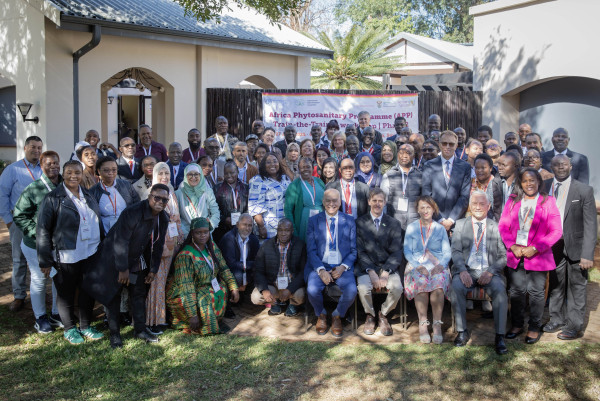
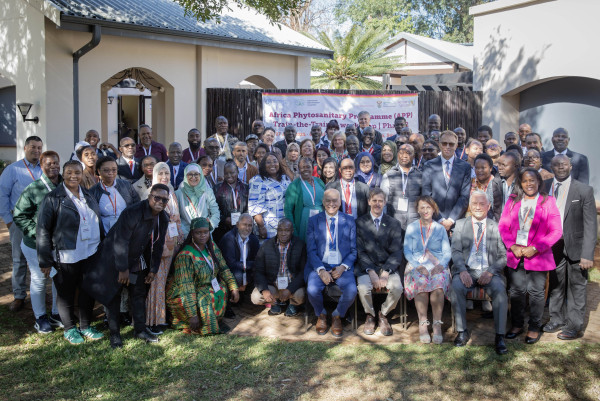
The launch event was hosted by the Government of South Africa and brought together over 50 phytosanitary specialists from nine countries: Algeria, Cape Verde, Chad, the Republic of Congo, Liberia, Malawi, Senegal, South Africa and Tunisia. They will participate in a weeklong Train-the-Trainer (ToT) workshop in advanced pest surveillance techniques, including the use of customised digital tools and applications for monitoring, detecting and reporting major pests of economic, regulatory and environmental importance in Africa. Participants will receive state-of-the-art tablets for geospatial pest surveillance, use field survey protocols developed by technical experts, and undertake practical sessions using the pest survey tools.
“Africa stands at a turning point. With immense biodiversity, rising agricultural productivity, and growing opportunities under the African Continental Free Trade Area (AfCFTA), we are well-positioned to become a global leader in the trade of high-quality plant products. But this vision can only be achieved if we ensure that the movement of plants and plant products is safe, traceable, and fully compliant with international phytosanitary standards” said John Henry Steenhuisen, Honourable Minister of Agriculture, in South Africa, in remarks read on his behalf by Jan Hendrik Venter, South Africa’s Director of Plant Health.
“Well-trained, well-equipped plant health officials across the continent are our best line of defence in maintaining pest-free or low-prevalence status, an essential condition for accessing these lucrative markets”, he added.
The first and pilot phase of APP started in 2023, engaging phytosanitary specialists from Cameroon, Democratic Republic of Congo, Egypt, Guinea-Bissau, Kenya, Mali, Morocco, Sierra Leone, Uganda, Zambia and Zimbabwe. Phase 2 builds on achievements made in the pilot phase and aims to train plant health officers, who upon their return to their countries will teach their peers in the national plant protection organisations (NPPOs) and other government stakeholders on the use of the APP suite of digital tools.
“We are building a critical mass of phytosanitary inspectors, technicians and officers across Africa by equipping plant health officers with the tools and skills to prevent and address major plant pest threats, that ultimately jeopardize food security, agricultural trade, economic growth and the environment”, said Beth Bechdol, FAO Deputy Director-General and Officer-in-Charge of the IPPC, in her video message.
Funded through generous contributions from the European Union and the United Kingdom of Great Britain and Northern Ireland, APP phase two builds on support from the United States Department of Agriculture (USDA), Animal and Plant Health Inspection Service (APHIS) which funded phase one in 2023. FAO and the IPPC are working to replicate and scale up the benefits from APP to more African countries and other regions.
Mitigating the pest problem in Africa
Worldwide, plant pests destroy about 40 percent of crop yields, resulting in approximately USD 220 billion in economic losses[1]. In Africa, the impacts of climate change are worsening the problem, with invasive pests – such as, fruit flies, false codling moth, maize lethal necrosis disease, citrus greening and fall armyworm – causing major damages. Fall armyworm alone is estimated to cause the highest yield loss in Africa – USD 9.4 billion annually –, based on data from the Centre for Agriculture and Bioscience International (CABI).
The African Union’s Plant Health Strategy for Africa highlights that limited technical capability remains a key barrier to achieving sustainable agriculture on the continent. Through APP, FAO, the IPPC and partners aim to strengthen plant health systems and build national phytosanitary capacity across Africa.
Distributed by APO Group on behalf of Food and Agriculture Organization of the United Nations (FAO): Regional Office for Africa.