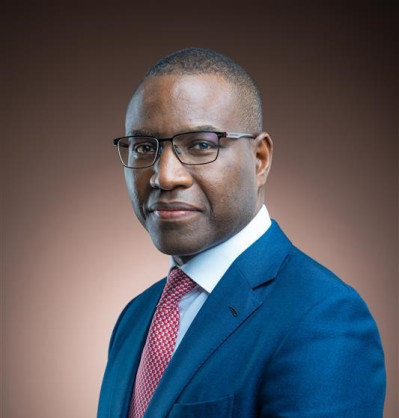

By Amadou Hott, Senegal’s official nominee for the position of President of the African Development Bank, Former Minister of Economy and planning, Senegal (www.AmadouHott.com).


Ask any traveler about their experience moving across parts of Africa, and you will likely hear about familiar challenges: high costs, indirect routes, and unpredictable schedules that can make even the simplest journeys more complicated and costly. These travel hurdles highlight the immense opportunity to further strengthen Africa’s integration and unlock seamless connectivity across the continent.
The potential is undeniable. According to the World Bank, the African Continental Free Trade Area (AfCFTA) stands to be the world’s largest free trade zone, encompassing 1.4 billion people and a combined GDP of 3.4 trillion USD. The African Development Bank projects that eliminating existing barriers could double intra-African trade within a decade from its current 15%; a figure that pales in comparison to Asia’s 60% and Europe’s 65%. Despite meaningful progress through the AfCFTA implementation led by regional economic communities, fulfilling this promise will require more efforts. Namely, Africa requires robust physical infrastructure and an operating system update to modernize institutional frameworks and encourage a new ecosystem of African-made goods and services.
Africa’s integration challenge can be likened to building a cutting-edge computer system. Success first requires powerful hardware: the physical infrastructure forming the backbone. Currently, the continent faces an annual infrastructure financing gap between 130 and 170 billion USD to meet essential hardware requirements across transportation corridors, energy networks, and digital highways. While our international partners have historically played a crucial role In bridging this financing gap, the current geopolitical landscape demands a paradigm shift. Africa must take the lead in investing in its own hardware.
The key lies in mobilizing African public and private capital first to build confidence among international partners and investors. Substantial capital can be generated within the continent through sovereign wealth funds, pension funds, high-net-worth individuals, and other sources. Development finance institutions like the African Development Bank must also play a transformative role by leveraging their expertise and credit ratings to channel this locally sourced capital into Africa’s development. The Alliance for Green Infrastructure in Africa (AGIA), launched by the African Development Bank in partnership with Africa50 and the African Union, exemplifies this approach, mobilizing project preparation and project development blended capital to build a 10 billion USD portfolio of green infrastructure projects with private sector participation from Africa and around the world. Regional energy integration, as highlighted by Mission 300 launched recently in Tanzania, is equally important.
Beyond physical infrastructure, Africa’s integration requires modern software upgrades: the systems, policies, and institutional frameworks that power trade across borders. Digital solutions are key to enhancing business operations across borders and reducing trade barriers. While discussions often focus on physical infrastructure gaps, outdated manual processes frequently limit the effectiveness of existing assets. The Pan-African Payment and Settlement System (PAPSS) exemplifies this transformation, promising to save 5 billion USD annually by making cross-border payments simpler and more transparent. Moreover, pilot programs in East Africa have shown that applying blockchain technology to existing value chains could help reduce trade costs by 20%, enhance protection against fraud, and expand access to new markets for businesses across the continent.
As African leaders convene at the AU Summit in Addis, we are at a pivotal time that requires action : the finalization of the Protocol on Digital Trade under the AfCFTA is a first step towards the bold transformation that we must operate. We must pursue economic transformation through infrastructure development and technology integration in our trade operations to evolve from a raw material exporter into an industrial and agricultural powerhouse. Beyond manufacturing value-added goods and value creation, our ability to integrate essential services -financial services, transport and logistics, education, and healthcare- will facilitate seamless business operations across borders. By positioning economic transformation at the heart of our integration agenda, Africa can advance up the value chain to generate wealth and create quality economic opportunities for all Africans, particularly our youth and women.
With Africa’s youth population set to double by 2050, the urgency of this transformation cannot be overstated. By effectively mobilizing our own resources first, driving economic transformation, and building both the required software and hardware, we can successfully integrate Africa. This is Africa’s moment to move beyond being the world’s largest free trade area by membership to becoming its most dynamic and innovative economic powerhouse.
Distributed by APO Group on behalf of Amadou Hott, Candidate for the Presidency of the African Development Bank Group.