Fintech companies in Kenya are expanding their reach and transforming how businesses hire, pay, and grow in the digital economy.
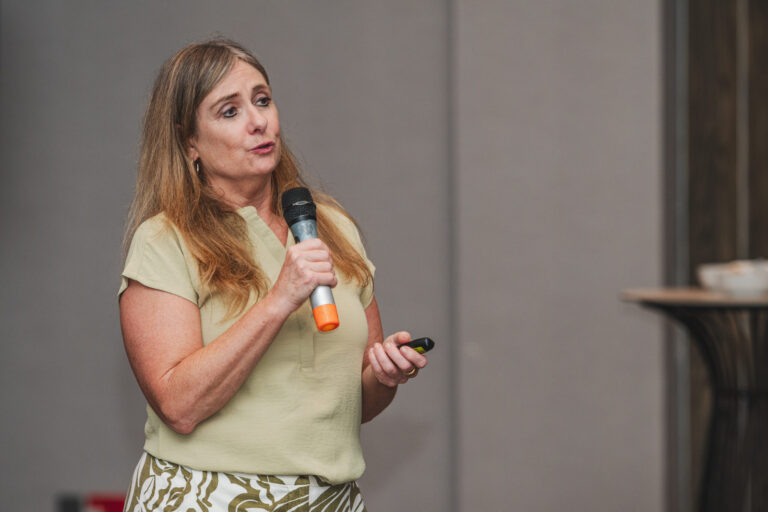
A report from McKinsey & Company estimates that Fintech market revenue will increase fivefold by 2028 reaching a value of $47 billion. CNN’s Eleni Giokos sat down with Mayowa Kuyoro, a partner at McKinsey & Company, who leads their Africa financial services group. She spoke about Fintech companies in Africa at present, and in the future, “In 2025, we’re seeing people look beyond what I would call the obvious force. So, Nigeria, Kenya, South Africa, and Egypt. People are also looking now at Francophone West Africa.”


She elaborates on the importance of funding and growth in the industry, “The scale of the problem is large. We have more than 50% of adults, Africans not having access to financial services or being underbanked. But the scale of the problem also gives you a sense of the skill or the opportunity. And we’ve seen the ingenuity of our founders, our young people on the continent who are deriving methods to deal with some of the challenges with respect to driving financial inclusion.”
For Kuyoro, the future of Fintech on the continent “is becoming increasingly democratised”, meaning she is, “excited to see some of the innovations that are going to come out of the space in the next couple of years.”
Paul Kimani and Jackson Kibigo started their company WorkPay in 2019 as a way to solve issues they faced in the workplace. As Kibigo describes, a big issue for employees, “Is that payroll is actually a pain for most African businesses.” Because of this, “Customers needed a solution that they could pay employees on time, but most importantly they needed a solution that they could make cross border or multi-country payroll payments.”
WorkPay currently operates in 31 countries across the continent and supports more than a thousand companies with hiring, managing and paying employees. Kimani delves into his drive for the next few years and where WorkPay is headed, “Our vision for the future lies on how do we really help the world to really tap into this really amazing talent that we have in the continent for them to be able to do that. And how do we make it easier, so this talent doesn’t necessarily need to travel and migrate into those countries? Can they work from here and be able to still serve these employers regardless of where they are?”
Rubadiri visits Tanzanian company Nala’s hub in Nairobi, where they are attempting to cut fees for cross-border payments. Co-founder and COO, Nicolai Eddy, explains the challenges of navigating the continent’s fragmented landscape, “What makes it very difficult to build a FinTech across the African continent is these are very diverse markets, and in order to build a very sustainable and strong operating business, you have to understand the nuances of each particular market. […] It’s so diverse and I think that’s what makes it very challenging, but also what creates a massive opportunity.”
Nala CEO, Benjamin Fernandes, spoke with Giokos about navigating fees for clients in the Sub-Sahara, “If you look across the African region, Africa’s a net import region. We import more than we export. So there’s a massive dollar shortage and the dollar is the world’s trading currency. If you think about that directly until you increase the amount of dollars coming in and the amount of exports going out where people are bringing more dollars into the market, there’s going to be a trade imbalance in many markets, which means FX rates, people will still lose on continuously, continuously over and over again until that happens.”
According to the World Bank, the cost of sending money in Sub-Saharan Africa is 8.37% of the total value of the transaction. Fernandes discusses with Giokos whether there’s a way to bring this down, “If you look at, let’s say Kenya for example, as a case study, Kenya’s largest export is tea. They export $1.2 billion of tea according to the OECD and that’s the country’s largest export. However, Kenyan migrants abroad, the diaspora sent 4 billion home last year, which is four times the country’s largest export […]. AI could help automate many systems, which reduces your overall expenditure as a business, especially if you start scaling.”
Fernandes ends by telling Giokos about Nala’s expansion plans, “We operate in 11 countries in Africa, four countries in Asia. We’ll be in 18 more countries this year. We operate in 21 countries in Europe, the UK and the US. We’re launching Canada next month and we’re just getting started.”
This article is extracted from the recent episode of Connecting Africa by CNN’s Eleni Giokos and Victoria Rubadiri