Progress in women’s representation in politics globally has been slow. Women’s representation in parliaments in Africa increased by one point from 2021 to 2024, shifting the total from 25% to 26%. “At this rate, it will take Africa until the year 2100 to achieve gender parity in its parliaments. But this assumes a linear progression, which is unlikely given the fact that generally after countries achieve the 30%-mark, progress slows down,” says Gram Mutenga, Regional Head of Programmes at International IDEA. In November 2024, UN Women and the International Institute for Democracy and Electoral Assistance (International IDEA), supported by the European Union, hosted the WYDE Women’s Leadership Initiative regional dialogue in Johannesburg, South Africa. The programme brought together more than 50 women political leaders from East and Southern Africa for three days of exchanging ideas, sharing lessons and best practices, and networking.


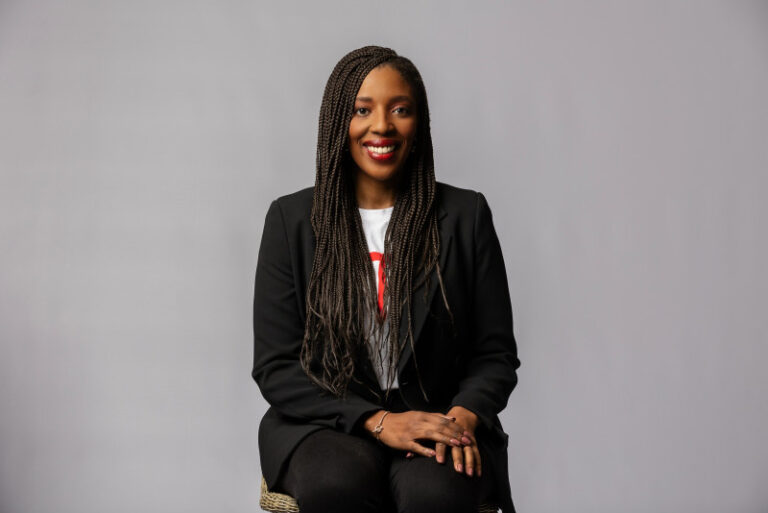
One of the participants, Lioness Sibanda, holds the prominent position of Secretary General of a political party in Eswatini. She is tirelessly fighting for democratic reforms while mentoring the next generation of female leaders: “Eswatini has deep-rooted cultural and religious practices that still hold to the belief that a woman cannot be in the forefront or stand in front of men and tell them what to do. I have done a lot of work in terms of contributing to the struggle for women’s rights in Eswatini, but because I am a woman, I am not taken seriously.” Sibanda added that her work as a politician is mainly recognized by leaders of organizations advocating for democratic reform, and it remains challenging to persuade voters about the benefits of electing women into office.
Another challenge women political leaders face is violence, which includes tech-facilitated gender-based violence. Sibanda knows this reality well as she reveals that she must constantly be on the lookout for threats to her life. UN Women’s data, based on five national surveys across Asia and Arab States, reveals that up to two-thirds of women elected in local government experience violence, yet less than 20% file formal complaints. Reiterating this issue, Hazel Gooding, UN Women Deputy Representative for the South Africa Multi-Country Office said, “We know that violence against women in politics weakens democracy by silencing voices and deterring future leaders. It is our collective duty to protect them, for instance by enacting and enforcing laws, providing victim support, protection and access to justice, training law enforcement officials, advocating to change minds and social norms.”
Betty Milgo, Secretary General for Persons with Disabilities in Kenya’s ruling party, is also a teacher and disability rights advocate. Her journey into politics has not been an easy one: “My community is patriarchal and many don’t understand the types of disabilities that exist, including albinism,” she explains. Milgo emphasized that women politicians urgently need increased visibility and institutional support to promote their participation in politics.
For women like Motamma Horatius, a politician from Botswana who also attended the dialogue, the slow progress comes at a high cost. For five years, she was at the helm of one Itumeleng Ward as the Councillor. She recalls one of the biggest challenges she faced in her career as running for office while pregnant. “I had to wear extra-big dresses to conceal my pregnancy, on the campaign trail to avoid being viewed as a weak link. Culturally, they would say a pregnant woman will not manage. I won primary elections without them knowing that I was pregnant,” says Horatius.
Immediately after winning the elections, she gave birth but only took two weeks’ leave as media articles scrutinized her absence. “I gave birth via C-section, and days later, there was already an uproar. ‘Where is she? She has abandoned her voters. She cannot serve,’ these were some of the statements in the media. Two weeks post-partum, I was on the campaign trail again, this time for the general elections,” she recalls. These experiences shed light on the numerous systemic barriers unique to women politicians and aspiring candidates. These challenges are rooted in deeply ingrained social and cultural norms that dictate certain expectations for women’s behaviour and impose restrictions on what they can and cannot achieve.
When asked what women political leaders want and need, Horatius, Milgo, and Sibanda shared similar perspectives. They underscored the importance of robust mental health support systems to help navigate the unique pressures of public life, particularly the pervasive violence against women in politics. Equally crucial is the need for comprehensive training and education programs to equip women with the skills and confidence to excel in leadership roles.
Building on these insights, participants of the Regional Dialogue identified additional strategies to enhance women’s and youth participation in leadership and decision-making. These include providing financial support and fostering economic independence for women and youth candidates, challenging restrictive social norms through education and advocacy campaigns, ensuring balanced media coverage, and amplifying the visibility of female role models. Finally, capacity building through training and mentorship, as provided under the WYDE Women’s Leadership initiative, was recognized as essential, alongside addressing intersectional challenges and actively combating violence against women in politics. Only by tackling these barriers collectively can the political landscape evolve to enable and empower women leaders.
WYDE | Women’s Leadership, funded by the European Union, is a collaborative global effort aimed at advancing women’s full and effective political participation and decision-making at all levels, especially those most often left furthest behind. WYDE | Women’s Leadership is implemented by UN Women, the International Institute for Democracy and Electoral Assistance (International IDEA), the Inter-Parliamentary Union (IPU) and United Cities and Local Governments (UCLG), and is part of the Women and Youth Democratic Engagement initiative (WYDE), powered by the European Union, which seeks to empower and strengthen the rights, and participation in public and political life of women and youth as key actors of development and change.
Distributed by APO Group on behalf of UN Women – Africa.