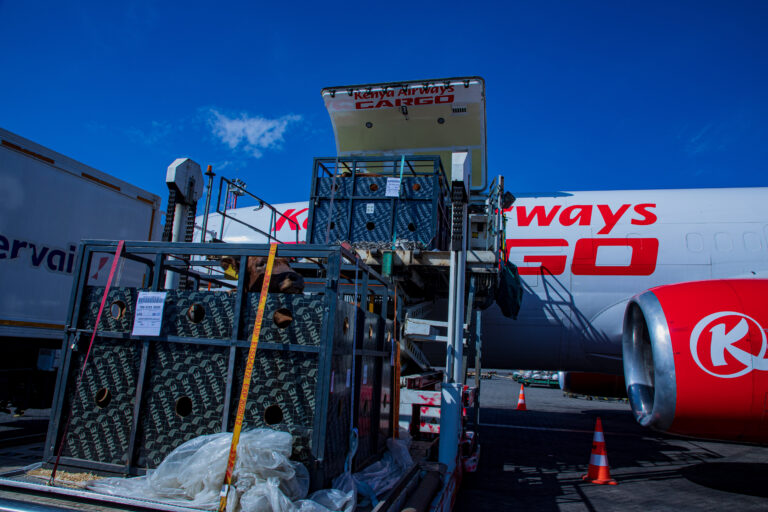
As Kenya’s trade continues to expand, the movement of goods across our borders has become increasingly central to our economy. Every container arriving through our ports, every truck crossing a border point, and every delivery reaching a warehouse carries more than its own commercial value. It carries jobs, working capital, business continuity and, in many cases, the confidence of entrepreneurs who have invested significant resources long before their goods arrive.
For years, conversations around protecting imported goods have been progressing with minimal change. Marine cargo insurance has often been viewed merely as a document needed to complete the import clearance process. That view is no longer applicable in today’s world, where interruptions in the supply of goods, unpredictable shipping costs, climate-related risks, changing laws, and rising customer expectations have become a reality.

As trade volumes grow, the systems that protect cargo must also mature. Globally, more than 80 percent of trade by volume is transported by sea, making marine transport central to supply chains and economic resilience. This becomes even more significant when viewed against Africa’s trade ambitions. The African Continental Free Trade Area (AfCFTA) aims to create a single market covering 55 African Union countries, about 1.3 billion people, and an estimated combined Gross Domestic Product of KES 439 trillion . If fully implemented, the agreement could raise Africa’s income by an estimated KES 58 trillion by 2035 and lift 30 million people out of extreme poverty.
Realising these gains will require more than reducing import taxes. Success will depend on how efficiently goods move across borders, how seamlessly supply chains connect and how much confidence businesses have in the systems that support trade. In this context, marine insurance is not simply an administrative requirement; it is part of the trust infrastructure that enables commerce to flourish across the continent.
The recent shift to Digital Marine Cargo Insurance (DMCI) is therefore more than a technology upgrade. It is a key milestone moment for Kenya’s import, logistics and insurance ecosystem. As of July 1st 2026, all importers are required to obtain Marine Cargo Insurance digitally through providers licensed in Kenya before customs clearance. This change directly links insurance, payment confirmation, and government approvals into a more connected digital process.
Trade does not fail only because goods are unavailable. It also fails when systems are slow, disconnected or unclear. Previously, an importer or clearing agent could face multiple touchpoints when seeking a marine insurance certificate, confirming payment, and getting authorisation. Each additional step increased the risk of delay, error, or uncertainty.
A connected and transparent digital system changes that experience, bringing insurers, regulatory platforms, payment systems and border infrastructure closer together all under one platform. This means less time chasing paperwork for importers, a predictable and faster process for clearing agents and stronger compliance for regulators.
That said, the real opportunity goes beyond making processes more efficient. It is about growing Kenya’s marine insurance industry. When import risks are handled by local insurers, more money paid for insurance stays in the country, supporting local businesses, creating jobs and strengthening the economy. It also means Kenyan businesses receive faster, more accessible support while building a stronger insurance sector that can better support trade and economic growth.
The partnership behind DMCI is also significant because it demonstrates what industry collaboration can achieve. At a time when customers expect convenience and regulators expect compliance, no single institution can solve the challenge alone. Insurers, intermediaries, clearing and forwarding agents, importers, regulators and technology platforms must work together to make the transition practical and trusted.
As insurers, our job is not simply to provide protection, but to understand our customers’ realities and challenges and innovate relevant solutions for them. Clearing agents need systems that work, but they also need responsive partners. Regulators need compliance, but they also need market cooperation.
We must also avoid limiting digitization to quickening processes alone. A digital platform is only successful if it improves the user’s experience and strengthens trust. The measure of DMCI success should not only be the number of certificates issued, but whether importers experience faster processing, fewer disputes, better compliance and stronger protection for their goods.
Kenya’s trade ambitions are clear. The country aims to remain a regional logistics hub, support enterprise growth, strengthen formal systems and improve the ease of doing business. Achieving that ambition requires more than infrastructure at ports and borders. It requires reliable financial protection that moves at the speed of trade.
The future of trade belongs to markets that move goods quickly, protect value intelligently and build systems that businesses can trust. Kenya has an opportunity to do all three. What remains is for every player in the ecosystem to make the system work for the people and businesses whose livelihoods depend on it.
The writer is the Underwriting Manager -Technical & Risk Improvement at CIC General Insurance Ltd.