Djibouti has launched Salaam City a new city of 7,000+ homes and the largest ever private residential development in the country’s history.
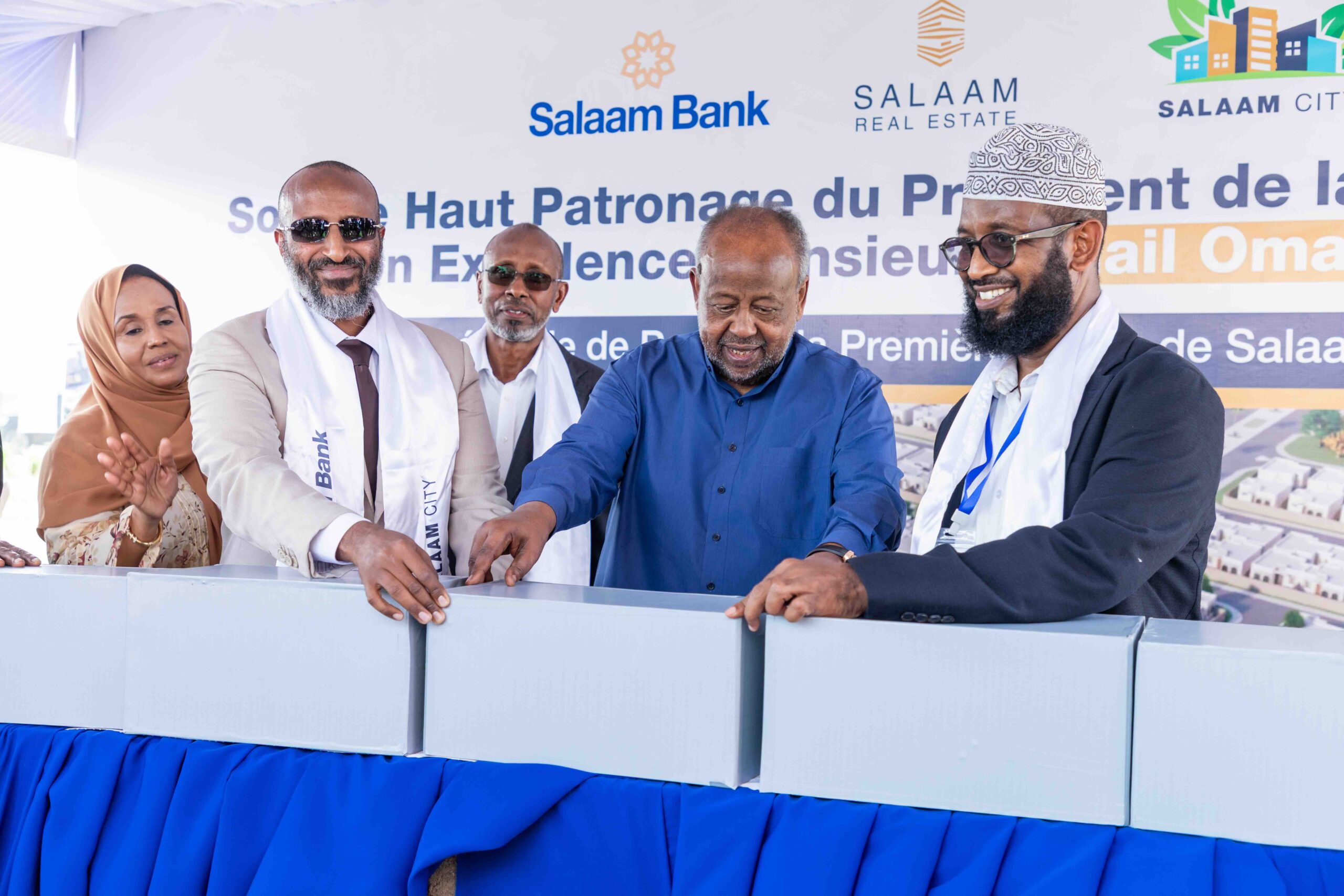
The launch ceremony was held today at the project site in Nagad, where President Ismaïl Omar Guelleh toured the first three completed homes and took part in a ceremonial laying of the first stones to mark the start of the main construction phase.
Developed by Salaam Real Estate, Salaam City is a large mixed-use housing development designed as a “city within a city”, across 2.4 million square metres of land. The masterplan includes:
- Seven schools
- A hospital and healthcare facilities
- A central mosque
- Commercial and office space
- Retail and neighbourhood services
- Parks and recreational areas
Mr. Mustafe Liibaan, General Manager, Salaam Real Estate, said:
“Djibouti is changing in ways people can feel. The ports are busier, the roads are improving, and the country is more connected to the world than ever before. Salaam City is designed to meet that moment, creating not just homes, but an inclusive community where families can enjoy quality housing, modern amenities, and a safe environment in which to grow.”
As Djibouti strengthens its role as a regional economic and logistics hub, demand for quality housing is growing alongside it. Salaam City is designed as an inclusive response to that need, a complete residential ecosystem offering affordable, middle-income and premium homes, targeting families and professionals.
The project is valued at approximately $480 million (85 billion Djibouti francs) and will be delivered in phases over five years, with the first residents expected to move in from 2028.
It is expected to stimulate significant economic activity, with workforce mobilisation projected to reach up to 2,000 people on site during peak construction periods across engineering, construction and technical sectors.
Mr. Djama Hersi, General Manager, Salaam African Bank said:
“This vision only works if finance runs through the entire project. It has to support the development itself, and it has to support the people who will live there. Building houses is one thing. Making them possible to own is another. Our role is to back this project from the ground up, from investment to financing, so that families don’t just see homes being built but have a real chance to buy one.”
The development is being financed through a combination of developer equity and support from Salaam African Bank, which will also provide Islamic financing, making home ownership accessible to families across income levels. The project is open to local and international investors, including the Djiboutian diaspora and institutional investors across East Africa and beyond.
The project has been designed using sustainable urban planning principles, incorporating energy- efficient construction, eco-friendly materials, landscaped parks and green spaces that promote a healthier, more balanced urban environment. Landscaped and green areas will play a central role in shaping the development’s environment.
Djibouti has invested heavily in ports, rail and logistics infrastructure over the past decade as part of the government’s Vision 2035 strategy, which aims to diversify the economy.
Located near the Bab el-Mandeb strait, one of the world’s busiest maritime corridors linking the Red Sea to the Indian Ocean, Djibouti has emerged as a strategic gateway between Africa, the Middle East and global trade routes.
H.E. Ismaïl Omar Guelleh, President of the Republic of Djibouti
“Djibouti’s development should be measured not only by the scale of its ambitions, but by its ability to improve the daily lives of its citizens. By expanding access to quality housing, generating employment opportunities, and building modern, inclusive communities, initiatives like Salaam City invest directly in the well-being of our people and the future of our nation.”