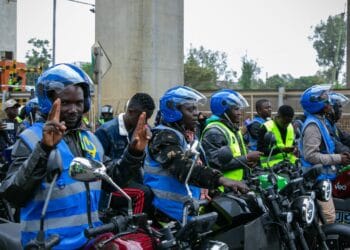
In Kenya, a boda boda rider’s livelihood is inseparable from the motion of their bike. No movement equals no income, no sick leave, no paid holiday and no safety net. That stark reality now intersects with a high-profile controversy over Spiro, the pan-African electric motorcycle firm, and its approach to Battery-as-a-Service. And the fallout has revealed something deeper than complaints about electric vehicles: a crisis of governance in innovation.
Electric mobility, especially Battery-as-a-Service, was meant to be part of the solution. Batteries are the most costly and safety-critical component of an electric motorcycle, accounting for around 35 to 40 per cent of the total cost. Centralised battery leasing can lower upfront prices, improve safety, and enable rapid swapping. Under the right conditions it can deliver much lower lifetime costs than traditional petrol bikes. The model makes economic sense in theory.


But the friction between platform rules and real human lives in Kenya’s informal economy has sparked an intense backlash. Riders depend on daily earnings often between KES 800 and 1,500. When their bike does not operate their income evaporates immediately. So when inactivity triggers the automatic suspension or remote deactivation of the heart of that bike, it is not just a technical glitch. It is, for many, existential.
In recent weeks, social media has seethed with stories and protests. Riders and influencers alike have claimed that after five days of inactivity — which might be due to illness, an accident, a funeral, fatigue, repairs or just patchy infrastructure; Spiro’s systems flag the battery as “stolen” or “abandoned” and render the bike immobile unless it is towed to a swap station.
To critics such as Kenyan radio presenter Rapcha The Sayantist, this is not compliance, it is punishment, and it has unleashed fury online with posts describing the ordeal of being locked out of one’s livelihood. “If you do not own the battery, you do not own the bike — you are just renting survival,” went one widely shared sentiment.
Spiro has defended its policy publicly as a means to protect assets, maintain battery health, and ensure swap stations serve active users. The company has also acknowledged that rigid enforcement can feel harsh and said it is reviewing how to accommodate exceptional circumstances such as medical emergencies or repairs.
This controversy is not simply about pricing or technology. It is about who really owns a mobility asset after hundreds of thousands of shillings have been spent. Social media posts and community groups have amplified the claim that many riders do not fully own the product they pay for, with particular emphasis on the battery — the very thing that makes the bike useful.
Critics have also deepened the debate by linking Spiro’s model to broader issues. The company does not just run an EV battery business. It participates in carbon financing, generating tradable credits based on avoided emissions, a highly lucrative market. That means the company, not the rider, captures much of the environmental value of the kilometres logged.
Accusations of predatory practices have grown, including allegations that financing partners collected deposits without delivering bikes and that spare parts and chargers are scarce or costly, reinforcing rider dependency on the company’s ecosystem. Calls for regulatory scrutiny by the Competition Authority of Kenya and the Consumer Protection Authority are now gathering momentum.
The developments underscore a basic truth: while the technology behind electric mobility is increasingly well understood and ever cheaper, governance remains the hard part. Internal platform rules, if left unexamined, can silently become labour policy in markets characterised by daily survival economics.
There are clear paths to reconcile asset protection with rider realities. Start with shifting from inactivity-based enforcement to payment- or usage-based triggers. Build in grace periods for illness and unforeseen emergencies. Recognise that infrastructure gaps and maintenance delays ought not be treated as rider failures. And ensure that ownership rights, contractual clarity and recourse mechanisms are transparent and fair.
Kenya’s e-mobility transition will not be judged by the number of electric bikes deployed, nor by the carbon credits sold, but by whether those in the saddle can truly see them as tools for stable, dignified livelihoods.