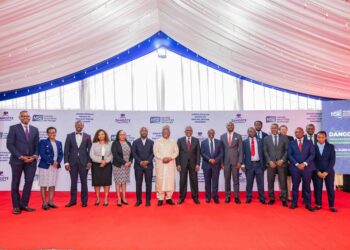
Stanbic Bank Kenya has unveiled a new renewable energy financing package designed to make solar power more accessible to businesses and households, as the country pushes to expand clean and affordable energy access.
The enhanced proposition, launched in partnership with Safer Power Limited, a local renewable energy engineering firm, offers flexible green loans with up to 100 percent financing, repayment periods of up to ten years, and a moratorium on principal payments during project development.


The Bank is also easing access for small and medium-sized enterprises (SMEs) by allowing applicants with smaller installations—valued below USD 50,000 (approximately KES 6.5 million)—to qualify using account turnover records instead of full financial statements.
Stanbic Bank’s Regional Head for East Africa, Business and Commercial Banking, Florence Wanja, said the Bank is positioning renewable energy at the core of its growth strategy.
“Renewable energy is a strategic priority for Stanbic Bank as part of our purpose, ‘Kenya is our home, we drive her growth.’ We recognise that access to affordable and sustainable power is essential for Kenya’s economic development. Our partnership with Safer Power represents a shared commitment to enable access to clean energy through innovative financing and credible sector partnerships,” she said.
According to the Kenya Institute for Public Policy Research and Analysis (KIPPRA) and the International Energy Agency (IEA), Kenya’s installed solar capacity stood at 229 megawatts by mid-2024, with annual growth projected at more than 28 percent through 2027, reflecting growing demand from both corporate and domestic consumers.
Safer Power’s Group Chief Executive Officer, Dalmus Mbai, said the collaboration would help accelerate solar adoption by linking clients to reliable engineering services and flexible financing.
“Our collaboration with Stanbic Bank enhances our ability to deliver clean and affordable energy solutions to businesses and households across the country. Together, we are driving Kenya’s renewable energy transition by combining innovative technology with accessible financing,” he said.
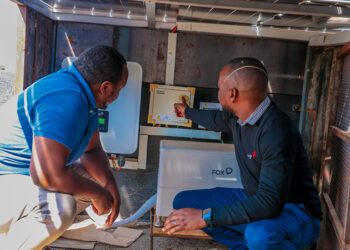
Stanbic’s proposition includes free energy audits, discounted interest rates, and zero loan processing fees for SMEs investing in solar installations. The Bank’s clients will also gain access to Standard Bank’s Sustainability Academy, an online learning platform offering training on sustainability, renewable energy, and climate-smart practices.
Ms Wanja added that the Bank intends to support Kenya’s ambition of achieving universal electricity access by 2030 through increased investment in clean energy projects.
“With our competitive and flexible renewable energy financing, we aim to accelerate solar adoption and support Kenya’s vision of universal electrification,” she said.