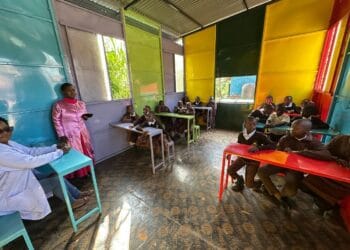
As the conflict in Sudan continues to drive mass displacement, an estimated 500 Sudanese refugees are arriving daily in Alkufra, a remote border city in southern Libya. The health system in Alkufra, not designed to support such a large population, is now overwhelmed, leaving many refugees without access to essential healthcare. The International Rescue Committee (IRC) warns that without urgent international support, the situation will deteriorate further, with devastating consequences for the health of both refugees and host communities.


Abdalla Zidan, IRC’s Health Manager in Libya, who recently led a field assessment in Alkufra to visit the IRC Mobile Medical Team staff and to assess the capacity of the local health system and the dire conditions in refugee shelters, said,
“The health crisis in Alkufra is escalating rapidly. Medical facilities are stretched to their limits, and Sudanese refugees are arriving in desperate need of care while living in overcrowded shelters with limited access to food, water, and medical assistance. We are seeing severe cases of dehydration, respiratory infections, and untreated chronic illnesses.
“Many, like Amina, a widow who fled Sudan with her only child after her husband was killed, have endured long and dangerous journeys only to find themselves stranded without medical support. She cannot afford the cost of medical tests required to obtain a Health Card—an essential document that would allow her to travel to larger cities in Libya, where she could access better opportunities and care.”
The IRC has been providing life-saving health care to Sudanese refugees in Alkufra. Since January, our mobile medical teams that operate in two healthcare facilities have delivered more than 2,700 medical consultations. IRC teams report that the most common health issues include respiratory illnesses, reproductive health concerns, genitourinary conditions, and infectious diseases. Despite these efforts, the demand for care far exceeds available resources, making additional funding critical to both sustain and expand health services.
Unlike in neighboring countries, Sudanese refugees in Libya lack formal recognition or legal protections, further restricting their access to healthcare. The UNHCR’s 2025 Regional Response Plan estimates $106 million is needed to meet basic humanitarian needs in Libya, particularly in border regions like Alkufra, where the health system is now under strain. Shelters hosting refugees are overcrowded, with reports of 300 families sharing a single bathroom, creating the conditions for potential disease outbreaks.
The crisis in Alkufra is part of a broader regional emergency. More than two million Sudanese refugees have fled to North Africa, including Chad and Egypt, placing immense strain on already fragile health systems in these countries too. With only a limited number of INGOs present in Alkufra the situation will worsen as financial resources to provide support remain limited.
The IRC urges the international community, humanitarian organizations, and Libyan authorities to address the health crisis by:
- Deploying additional medical teams to provide emergency care and expand outreach services in coordination with local health authorities.
- Ensuring emergency medical referrals by repairing and maintaining ambulance services for critically ill patients.
- Strengthening the health system by rehabilitating medical infrastructure, increasing healthcare staff training, and improving conditions in refugee shelters.
- Improving nutrition and food security by prioritizing nutritional support for vulnerable groups, including children and pregnant women, to prevent malnutrition-related health complications.
- Expanding water, sanitation, and hygiene (WASH) services to reduce the risk of disease outbreaks in overcrowded shelters.
- Enhancing protection services for women and children, ensuring access to healthcare and mental health support for trauma survivors.
Distributed by APO Group on behalf of International Rescue Committee (IRC) .