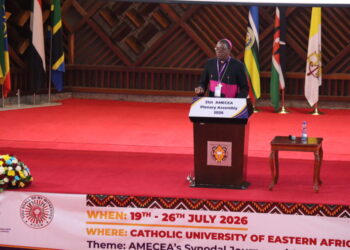
The African Catholic Union of the Press (UCAP) has called on Catholic media practitioners across the continent to embrace technological progress responsibly while safeguarding human dignity, truth, and authentic values in the digital era.
This commitment was made during UCAP’s Triennial Continental Congress held from 10 to 17 August 2025 at GIMPA in Accra, Ghana, under the theme “Balancing Technological Progress and the Preservation of Human Values in the Age of Artificial Intelligence (AI).”

The week-long gathering brought together more than 100 Catholic journalists, lecturers, content creators, and media professionals from over 20 countries, including 19 African nations. Delegates deliberated on the ethical implications of AI in journalism, as well as the opportunities it presents for communication and evangelisation.
Key Resolutions
At the close of the Congress, participants adopted a series of resolutions, including:
- Safeguarding Human Dignity: Affirming that human dignity must take precedence over technological advancement, with Catholic journalists urged to uphold truth, integrity, and genuine human relationships in their work.
- Ethical Use of AI in Media: Encouraging African media houses to establish clear guidelines to ensure AI serves the common good, while rejecting manipulation, misinformation, and disinformation.
- Strengthening Media Training: Integrating AI, digital literacy, and Catholic social teaching into training programmes for journalists and media students.
- Collaboration with the Church and Civil Society: Partnering with Episcopal Conferences, universities, policymakers, and civil society to ensure technological innovation is matched with moral responsibility.
- Promoting a New Ethic of Communication: Fostering peace, reconciliation, and fraternity by amplifying the voices of the marginalised and promoting truth, justice, and solidarity.
Recommendations
The Congress further issued recommendations addressed to governments, media organisations, Catholic professionals, the Church, and UCAP itself. These included:
- Governments were urged to regulate AI to prevent privacy violations, manipulation of consciences, and erosion of truth.
- Media organisations were encouraged to adopt policies ensuring AI tools do not replace human judgment, but instead complement ethical journalism.
- Catholic media professionals were called to ongoing formation in technology and ethics, and to act as “missionaries of peace and reconciliation” against disinformation.
- The Church in Africa was urged to invest in media education and to support Catholic communicators in addressing AI’s ethical challenges.
- UCAP committed to developing a continental charter on AI and Ethical Journalism, and to organising workshops and research initiatives on faith, media, and technology.