Antimicrobial resistance (AMR) is one of the top global public health and development threats. About 4.71 million deaths were linked to bacterial AMR in 2021 alone, with sub-Saharan Africa accounting for highest mortality rates. AMR could be responsible for up to 2 million deaths in Africa by 2050, underscoring the need for urgent action to protect health and save lives. Ifeyinwa George, a pharmacist and AMR programme manager at Dr Ameyo Stella Adadevoh (DRASA) Health Trust, a public health nonprofit in Nigeria dedicated to strengthening health systems, discusses the complexities of addressing AMR in the African region.


How should governments increase efforts to address AMR?
There are two broad priorities here. The first is the development of evidence based One Health national action plans for AMR that are not only grounded in solid evidence but also costed and measurable. For example, Nigeria’s One Health National Action Plan on AMR provides a strategic framework tailored to the country’s specific needs, ensuring that resources are prioritized effectively. This type of framework guides efforts in the right direction and encourages consensus on tackling AMR across the continent.
The second priority is establishing dedicated, sustainable health financing for AMR. A well-developed plan is crucial, but without the necessary funding, it cannot be implemented. Governments need to allocate sustainable sources of funding to drive AMR activities outlined in their national plans. While partner funding can be helpful, it’s essential for governments to identify their own funding sources for AMR initiatives. This will help contain the spread of resistant pathogens, improve health outcomes for vulnerable populations, and bring countries closer to effectively managing AMR challenges.
What innovative ways are there to work with communities to curb AMR?
At the grassroots level, where much of our work is done, it’s critical to ensure that AMR interventions truly reach and resonate with the community. One innovative approach we use is reaching communities in their own languages. This reduces hesitancy and makes people more willing to engage. When we communicate in their language, they feel more comfortable and see us as partners working toward a shared goal.
Another key approach is community-led initiatives. Empowering communities to take ownership of AMR interventions is very key. Prioritizing community participation ensures that these interventions are both community-owned and community-led. To make this effective, it is important to leverage on local influencers, such as community leaders and youth leaders, who champion best practices and drive uptake within the community. This approach ensures sustainability and encourages communities to lead the effort.
Additionally, youth-friendly interventions have proven effective in engaging young people in AMR initiatives. Traditional methods may not always capture their attention, so incorporating games, art competitions, music, and poetry and organizing team-based problem-solving events makes learning about AMR more interactive and appealing. These creative approaches foster enthusiasm among young participants, encouraging them to actively contribute to AMR efforts.
What role do young people play in addressing AMR in the African region?
Young people are critical in the fight against AMR across Africa. The continent as a whole has a young population, even more so compared to other parts of the world ‒ representing a massive resource for AMR activities. This demographic brings fresh perspectives and innovation to AMR initiatives.
The unique strength of young people lies in their ability to engage their peers. When young people are involved, they bring energy, creativity, and a sense of ownership that makes AMR projects more innovative and appealing to others their age. They’re able to reach out to their communities in ways that resonate, whether it’s through social media, educational sessions in churches and mosques, or simply by leading by example in their neighbourhoods.
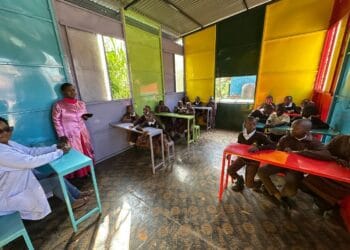
At DRASA Health Trust, we’ve collaborated with WHO to engage over 2000 AMR ambassadors across 30 secondary schools in Nigeria. These ambassadors play a huge role in educating their communities and reaching even more people, showing that young people are a powerful force for positive change in AMR. Involving young people is essential, not only because they are the future but because they ensure the continuity of best practices. Leveraging this vibrant, innovative human resource base is a key strategy for sustainable AMR mitigation in Africa.
What are the major obstacles to implementing effective AMR strategies in region and how can they be overcome?
The biggest obstacles to implementing effective AMR strategies across Africa include suboptimal health financing and political commitment, limited awareness and education, weak regulatory enforcement, and inadequate laboratory capacity. Many African countries rely on external funding, which may not align with local priorities. Sustainable domestic funding and strong political commitment are essential to create resilient AMR programmes.
Public awareness is also a major barrier, as many people are unaware of the dangers of misusing antibiotics, which leads to self-medication and resistance. Strengthening regulatory enforcement is crucial to control drug misuse across human and agricultural sectors. Additionally, limited laboratory capacity hampers the detection and tracking of resistant pathogens, making evidence-based decision-making challenging. Enhancing surveillance and coordination across sectors, as well as promoting local vaccine manufacturing and improved accessibility, are key to overcoming these challenges.
Distributed by APO Group on behalf of World Health Organization (WHO) – Nigeria.