In the village of Dalafilani, Guinea, discover how the Guinean Red Cross supported the community to come together, building a network of canals to reduce the risks of flooding and infectious diseases.

For as long as they can remember, the people of Dalafilani—a small, rural village of 2,000 people in central Guinea—have faced a recurring and significant problem: flooding.
Every time heavy rains came, water coursed through the village, damaging homes and leaving large pools of polluted, stagnant water—the perfect breeding ground for waterborne and mosquito-borne diseases.
Not only did the floods jeopardise people’s homes and health, they also caused economic pressures. Villagers used to have to frequently buy medicine to treat relatives who fell sick from flood-related diseases, diverting precious income from other daily needs.
So when local Guinean Red Cross volunteers rallied the community together to discuss potential solutions, the community decided it would do whatever it takes to keep the floods—and diseases—at bay.
A community diagnosis at the heart of change
Through the Community Epidemic and Pandemic Preparedness Programme (CP3), trained Guinean Red Cross volunteers led the community through a participatory risk assessment to understand the problem, discuss the community’s needs and resources, and come up with a workable solution.
“As members of this community, we worked together to identify the priority problems. During a community diagnosis, the residents recognized that flooding and wastewater were a major source of disease, and that their environment had a direct impact on their health, safety and livelihoods,” explains Guinean Red Cross volunteer, Sekou Oularé.
“Together, we came up with the idea of constructing a system of canals through the village to evacuate flood and wastewater. The Red Cross facilitated this process, providing tools and logistical support,” he adds.
Taking collective action
With a plan of action agreed, villagers in Dalafilani quickly got to work turning their idea into reality.
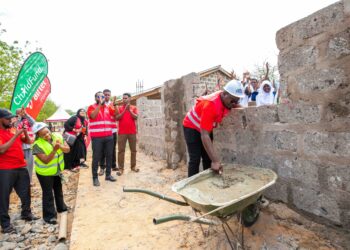
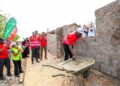
“We decided to mobilize the whole community. Men and women worked hand in hand to build the canals. We made bricks, dug trenches and transported materials. This work has enabled us to create a functional drainage system that carries rainwater and domestic wastewater away from our village,” explains Fanta Bö Kourouma, president of the Dalafilani youth group.
Guinean Red Cross volunteers were on hand throughout the process—helping to build the canals, map out where they should run to most effectively carry water away from the village, and procure the necessary materials.
A healthier, safer community in the long-term
Following the construction of the canals, it didn’t take long for the community to see a positive change. The village is cleaner, there are no more pools of stagnant water following the rains, and families are relieved to see their children in better health.
“Before, we had problems with illness, especially among children. They used to play in the dirty water and it made them sick. It was a heavy burden on our finances because of the cost of medicines. Today, thanks to the drainage system, there are fewer mosquitoes and fewer children are getting sick,” says Gbè Traoré, a resident of Dalafilani.
Local health authorities have also reported a decrease in diseases, with head of the Dalafilani health post, Bernard Camara, recording significantly fewer medical consultations relating to malaria and water-borne diseases.
Guinea Red Cross volunteers continue to support people in Dalafilani, conducting regular community meetings to raise awareness of epidemic risks and reinforce cleanliness efforts.
Dalafilani village chief, Fodé Oularé, is relieved to see improvements to his community’s health, and understands they need to keep working together to keep disease risks at bay in the long-term.
“Before, rainwater was running off in all directions, creating puddles of stagnant water. Now, with the system we’ve built, the water is drained away and we have a cleaner environment. The Red Cross has been working with us to raise awareness and maintain this progress, but it’s up to us, the residents, to keep things clean to prevent disease,” he explains.
Distributed by APO Group on behalf of International Federation of Red Cross and Red Crescent Societies (IFRC).