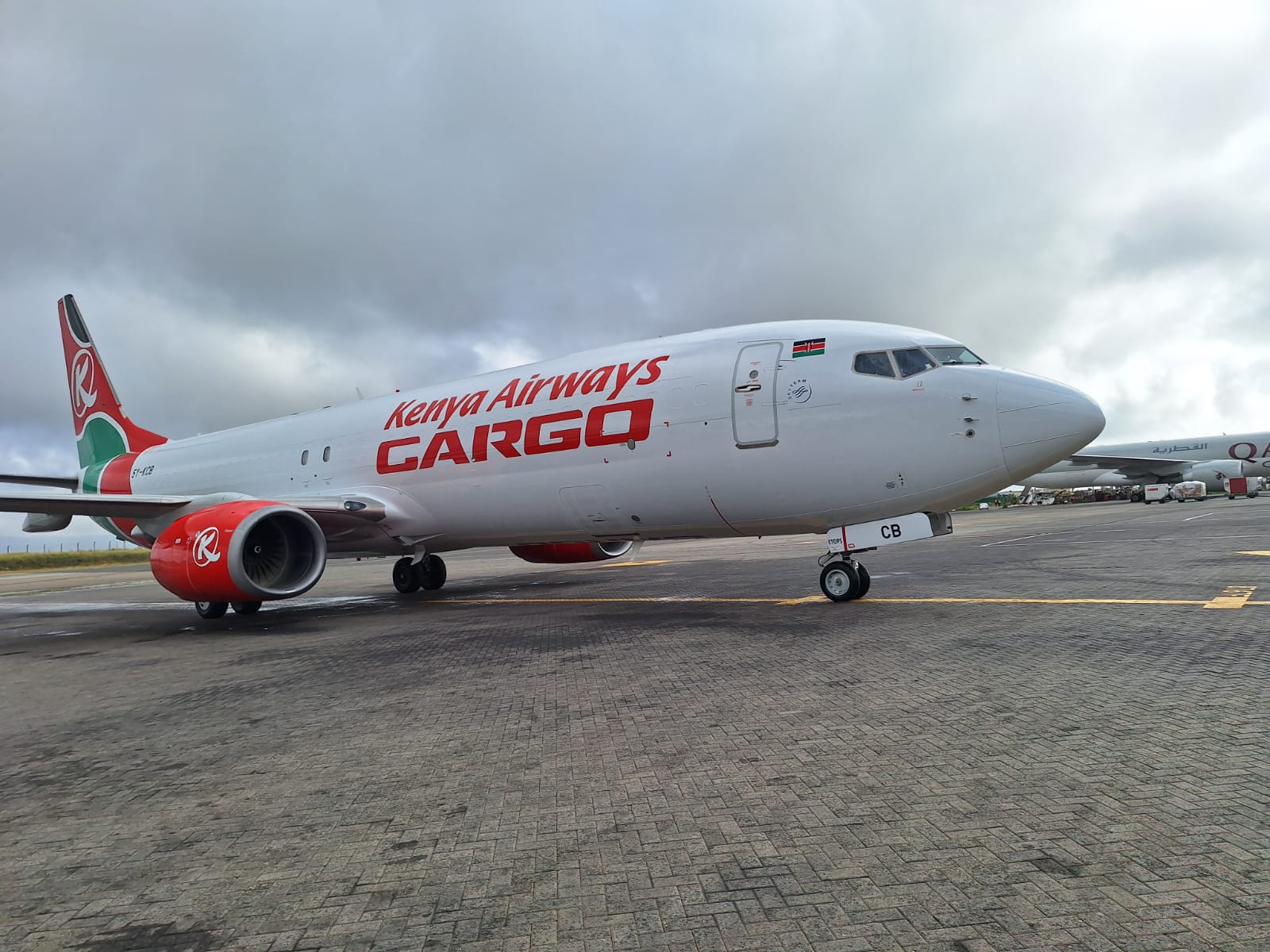
Kenya Airways (KQ) has reported an operating loss of KShs 5.6 billion and a loss after tax of KShs 17.2 billion for the full year ending December 31, 2025, largely driven by severe global aviation supply chain constraints, grounded aircraft, and infrastructure hurdles.
Despite strong travel demand, the national carrier’s performance was significantly hampered by a lack of operational capacity rather than a shortage of passengers. “While our financial performance reflects a challenging year, it is important to recognise that this was driven primarily by global supply chain disruptions and not a lack of demand. The appetite for travel remains strong, and the strategic relevance of Kenya Airways has never been more evident,” stated Kenya Airways Chairman Kiprono Kittony.


Financial and Operational Turbulence The airline saw its total revenue decline by 14%, dropping by KShs 27 billion to close at KShs 161 billion for the year. This financial dip was directly linked to an 18% reduction in capacity—measured in Available Seat Kilometres (ASKs)—and a subsequent 13% drop in passenger numbers. Operating costs decreased by a modest 3% to KShs 167 billion, reflecting both reduced flight activity and the financial drag of carrying costs for grounded planes.
A primary operational bottleneck was the temporary grounding of three Boeing 787-8 Dreamliner aircraft due to global engine shortages and supply chain delays. Beyond international supply issues, local environmental factors played a devastating role: over the past seven years, bird strikes at Nairobi’s Jomo Kenyatta International Airport (JKIA) have cost the airline at least eight engines on the ground, with two damaged beyond economic repair.
Acting Group Managing Director and Chief Executive Officer George Kamal highlighted the difficult operating environment. “Kenya Airways operated in a complex macroeconomic landscape marked by elevated input costs, particularly fuel and labour, and ongoing geopolitical uncertainty,” Kamal noted. Tensions in the Middle East resulted in closed airspaces, forcing the airline into longer routings that increased fuel burn and drove up operating expenses.
A Strategic Pivot: Cargo and Engineering Facing razor-thin passenger margins—estimated at just $1.30 to $1.40 per seat—Kenya Airways is entering the second phase of its turnaround strategy, focusing on stabilization, capacity recovery, and aggressive diversification.
Cargo has emerged as a core growth engine to offset the volatile passenger business. The airline has dramatically expanded its daily cargo capacity from 70 tons to 180 tons, capturing 28% of the Kenyan market. A recently welcomed Boeing 747 freighter moved over 110 tonnes of Kenyan perishables to the UAE, and the airline plans to introduce two additional Boeing 777 freighters by November 2026. This expansion targets a 40% share of the Kenyan market and aims to fill a massive daily market gap for local exporters.
Simultaneously, Kenya Airways is transforming its engineering department into a standalone investment asset. The carrier recently achieved a major milestone by completing its first-ever in-house heavy check on a Boeing 787. Furthermore, KQ has regained its unrestricted EASA Part 145 certification, allowing it to service other carriers’ aircraft, including the Boeing 777. Several grounded aircraft are currently undergoing heavy checks to return to service ahead of the June-to-October peak travel season.
Other diversification pillars include drone services through subsidiary Fadhili Aviation, and logistics training at the Pride Centre.
Infrastructure Challenges and Economic Impact The airline’s recovery remains tightly intertwined with the infrastructure at its hub. Processing bottlenecks, baggage delays, and capacity strains at JKIA have directly impacted KQ’s operations and reputation. Despite these hurdles, Kenya Airways carries 5.2 million of JKIA’s 9 million annual passengers, accounting for roughly 60% of total traffic.
Management continues to emphasize the airline’s role as a national asset with an outsized economic multiplier effect. The aviation and tourism sectors drive 40% of Kenya’s services exports, contribute $3.3 billion to the GDP, and support hundreds of thousands of jobs.
“Kenya Airways is more than an airline; it is a critical enabler of trade, tourism, and regional integration. Our value extends beyond financial results to the economic connectivity we provide across Africa and globally,” Kamal emphasized.
Outlook for 2026 The airline’s outlook for 2026 is cautiously positive, contingent on continued improvements in maintenance recovery, supply-chain access, and structural policy support. Key priorities for the coming year include restoring the fleet, maintaining strict cost discipline, and advancing a capital raise to strengthen liquidity.
“We are taking deliberate steps to stabilise the business in the near term while laying the foundation for long-term resilience,” said Kamal. “The skies may be turbulent today, but our direction is clear and our destination is long-term, sustainable growth”.