In Kigoma, Tanzania, where over 80 per cent of livelihoods rely on small-scale farming, fishing, and informal trade, women constitute the majority of the agricultural workforce and are the backbone of the region’s economy.


However, in an increasingly digital economy, limited digital literacy remains a major barrier to unlocking women’s full economic potential, with many women in the region lacking the necessary skills to use mobile platforms, digital financial services, or online marketplaces, impeding the growth and formalization of women-led businesses.
Amid these challenges, women like Chichi Ramadhani Kamandwa are increasingly harnessing digital tools to grow their businesses. A 39-year-old mother of three and a determined entrepreneur living in Kigoma town, Kamandwa runs a small-scale agro-processing business specializing in the milling and packaging of maize, cassava, and nutrient-rich flours.
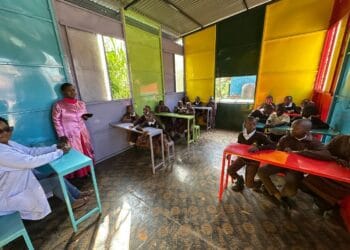
In 2024, she participated in a Digital Literacy and Branding workshop organized by UN Women to equip women entrepreneurs in the region with practical skills to expand their businesses and access wider markets through digital platforms. The initiative formed part of the second phase of the UN Kigoma Joint Programme (KJP II) – a collaborative effort of 17 UN agencies working with local authorities and communities to advance development and human security in Kigoma – and engaged beneficiaries of UN Women’s “Binti Dijitali” African Girls Can Code Initiative (AGCCI), who facilitated sessions with hands-on technical expertise and peer-led guidance.
“Before the training, I only used my phone for calls and taking pictures. I didn’t know it could be a marketing tool for my business, helping me showcase my products online, reach more customers, and improve my record-keeping,” said Kamandwa.
With the skills she has acquired, Chichi is now transforming her business.
“I learned how to create product labels, list ingredients and registration numbers to build customer trust, and package my products attractively,” said Kamandwa, adding that the most beneficial change she made was improving my packaging.
“I realized how much the look of a product matters. After updating my logo and labels and switching to better-quality packaging, my sales increased significantly, because customers had more confidence in my brand,” she explains.
Kamandwa also began using accessible platforms such as WhatsApp to reach new customers, advertise her products, and receive orders.
In Kigoma, many women entrepreneurs navigate complex social and economic realities. Alongside their business efforts, they often carry the primary responsibility for household care and income generation, frequently without consistent support from partners.
“Once a woman begins to earn, she is often left to shoulder everything alone,” Kamadwa explains. “Some men leave for work in other towns, return only briefly, and then leave again, while the woman is left behind to care for the children, run the household, and manage her business on her own.”
Additionally, limited access to financial services or reliable support systems leaves women vulnerable to unfair treatment or exploitative arrangements, particularly when trying to access markets or services.
“When you lack information or tools, people take advantage of you,” says Kamandwa.
Through strategic partnerships with local government authorities, trade officers, mobile service providers, and private sector actors, UN Women, under KJP II, is working to create an inclusive and enabling business environment for women and youth.
“Initiatives such as the digital literacy workshop aim to strengthen the capacity of women-led enterprises to adopt innovative, market-driven practices, build resilience, and transition into formal markets for sustainable growth,” says Ms. Lilian Mwamdanga, UN Women Specialist for Women’s Economic Empowerment.
According to Kamandwa, the benefits of workshops like these extend well beyond the knowledge they gain. They create opportunities for women to connect with peers, share experiences, and establish lasting support networks. “We have even formed small groups to support and uplift one another,” she shares.
“I have also started teaching other women how to use their phones for business. It might seem like a small thing, but it can really transform how we work and sell.”
The use of digital platforms has also empowered women like Kamandwa to manage their sales independently, reducing reliance on informal and often unreliable intermediaries. With increased visibility and growing sales, Kamandwa has expanded her inventory and begun selling her products in bulk.
She also hopes to continue mentoring others and to start providing training for young women interested in business, so they too can build a future of their own.
“If I can do this, I believe other women can too. We just need the right support and a chance to grow,” she says.
Distributed by APO Group on behalf of UN Women – Africa.