A recent survey across Africa by KnowBe4 (www.KnowBe4.com) reveals that 84% of respondents rely on social media as their primary news source, with 80% favouring Facebook; This heavy dependence on social platforms for information is concerning, particularly as disinformation continues to rise.

With 19 African countries set to hold elections in 2024 and numerous political campaigns underway, worries about misinformation (unintentionally shared false information) and disinformation (deliberately spread fake news) are mounting. The Africa Centre for Strategic Studies (http://apo-opa.co/3Bj92mY) reports that disinformation campaigns in Africa have quadrupled since 2022, often backed by foreign states like Russia and China, leading to social instability.
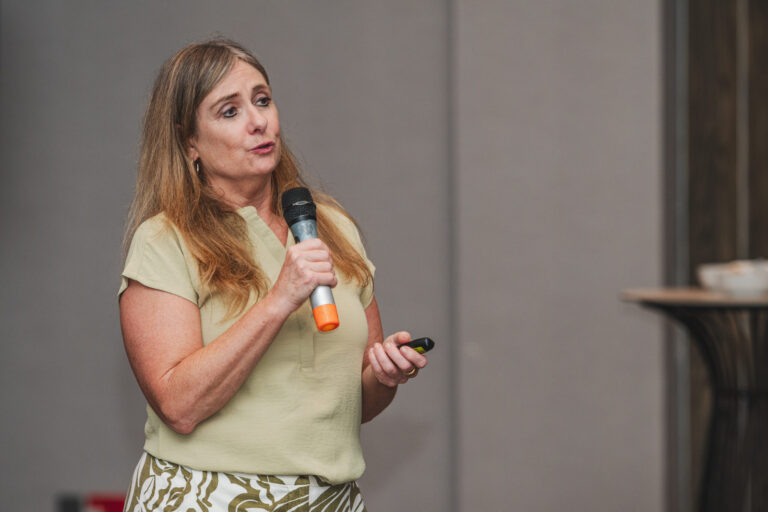
In response to these issues, KnowBe4 conducted a survey in June 2024 on political disinformation and misinformation across five African countries: Botswana, Kenya, Mauritius, Nigeria, and South Africa. The survey, which included 500 respondents, found that the vast majority of users (84%) prefer social media for news consumption over traditional channels like radio, TV, and news websites. Anna Collard, SVP Content Strategy and Evangelist at KnowBe4 AFRICA, notes, “80% of respondents are consuming news on Facebook and over 50% use TikTok. This is alarming as neither of these channels is very reliable in terms of news.”
The ability to discern fake news may be exaggerated
Another concerning finding is that 82% of respondents feel confident in their ability to distinguish between true and false information online, despite a generally low level of formal education on the topic. Collard comments, “While most respondents reported being able to tell the difference between real and fake news, I doubt this is the case. Other research (http://apo-opa.co/4di3hDj) has shown that most people overestimate their ability to detect deepfakes, and ironically, more people trust AI-generated images than actual photographs.”
The survey also revealed that disinformation is becoming a significant concern for many. 80% of respondents expressed high levels of worry about the negative impact of fake news and its potential to cause social division. “In Kenya, many respondents said they had seen firsthand how disinformation can lead to tribal conflict,” Collard notes.
She further explains that social media influencers using inorganic hashtags fuelled similar political discord during Nigeria’s election last year. “Social media’s rapid spread of false information and the increasing accessibility of AI tools allow for the quick and cheap creation of sophisticated disinformation campaigns.”
Collard adds, “As we saw when entities disputed the outcome of South Africa’s 2024 election, there are individuals motivated to disrupt democracies and act maliciously to create chaos because it serves their own agenda.” Another historic example is the #whiteminoritycapital disinformation campaign (http://apo-opa.co/3XOF1Eu) run by the British PR company Bell Pottinger in 2017 to obfuscate state capture by former SA president Jacob Zuma.
Need for more training and tighter controls
The survey underscores the need for increased education and awareness surrounding misinformation and disinformation. A significant 58% of respondents report having received no training on the topic, while a concerning 32% admit to simply ignoring fake news, highlighting the need for a more proactive and engaged response.
“We need a multi-faceted strategy to combat disinformation,” says Collard. This approach should encompass enhanced awareness and critical thinking among users; coordinated government action to prevent the spread of fake news (including stronger legislation), and increased vigilance from social media platforms in detecting and removing disinformation campaigns.
“Fake news is an ongoing challenge that requires continuous attention,” Collard concludes. “To fight it effectively, we need a combination of new technology, better ways to prevent it, and most importantly, teaching people to consume media while thinking critically, particularly if it is emotionally laden or potentially polarising content. As the digital landscape develops, so too must our strategies for maintaining the integrity of information.”
To read the full 2024 Political Disinformation in Africa report, click here: https://apo-opa.co/3zxqZO7
Distributed by APO Group on behalf of KnowBe4.