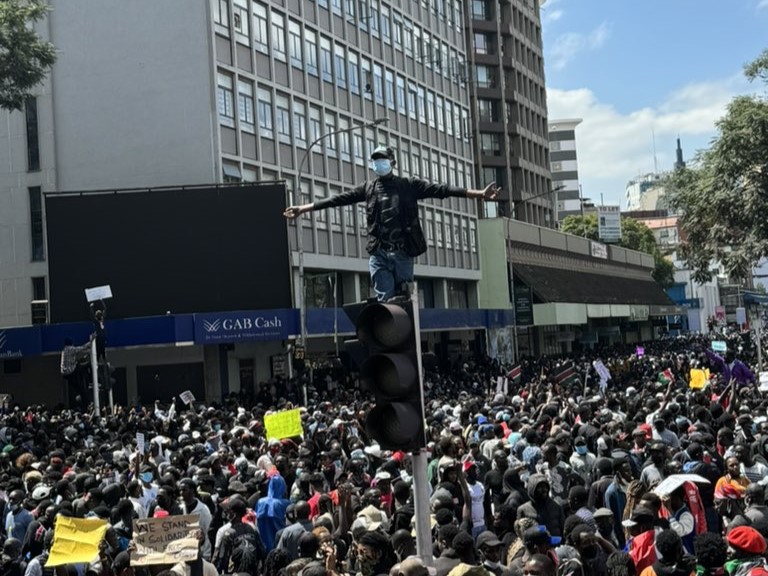
As Kenya marked the first anniversary of the dramatic June 25, 2024 anti-tax uprising, it was Gen Z, a digitally savvy youth cohort, that once again took to the streets this year. Their motivation had evolved from economic grievances to a broader lament over police brutality and political opacity. But rather than violence, many of these young activists wielded social media as their weapon. The results, however, were devastating: at least tens are dead, hundreds maimed by live bullets, and the nation left to contemplate a painful question, has the government learned anything?
Gen Z’s digital revolution meets analog repression
In stark contrast to the defiance of last year, when protests forced the government to withdraw the finance bill, this year’s demonstrations were not triggered by tax legislation but by a custodial death that exposed deep mistrust of state institutions. The death of blogger Albert Ojwang and, earlier, a street hawker at the hands of the police reignited simmering anger. Gen Z responded by mobilising virtually and confronting physically, armed with hashtags like #RutoMustGo on X and Telegram. Their irony was palpable, they felt shut out of traditional politics, so they used digital means to force their voices into public spaces.


But the government’s reaction was rooted in fear, not reform. Before the sun rose on June 25, police had erected barricades and a 500‑metre exclusion zone around Parliament and State House, banned live media coverage, and unleashed tear gas, rubber bullets, water cannons, and live ammunition.
This mismatch, Gen Z’s online democracy versus the state’s analog crackdown, generated chaos. Scores of peaceful marchers were shot, possibly mistaken for rioters, and the death toll climbed.
Once more, the “shoot-to-kill” doctrine
Interior CS Kipchumba Murkomen’s recent orders granting police “shoot‑to‑kill” authority during attacks on security installations may have emboldened a more aggressive enforcement posture . While he may argue such force was justified by incidents of arson and attacks on public property, this directive appears to blur the line between security and repression, especially when protesters are largely unarmed. As an expert in governance and rule of law, one cannot ignore the chilling effect this doctrine has on civil liberties.
An actual breakdown of state accountability
The Kenyan Constitution (Article 37) permits peaceful assembly but restricts it if violence ensues. However, the use of lethal force must be proportionate and a last resort. The state’s response on June 25 fell short. The deployment of snipers, use of live ammunition in densely packed crowds, and forced media blackouts all pointed to failure, not in protecting order, but in respecting constitutional constraints.
Equally alarming were new reports of enforced disappearances, such as protesters or their organizers simply vanishing—an echo of last year’s disappearances, where at least 60 people were killed and 74 forcibly disappeared, according to the Kenya Human Rights Commission . Yet accountability remains ad hoc, reactive at best.
The Independent Policing Oversight Authority (IPOA) may review cases, but its records show few real convictions or systemic change. Despite vocal criticism from NGOs, journalists, and legal experts, the state has not internalized accountability, evidenced by recurring brutality.
Costs far outweigh gains
What did the state accomplish through repression? Maybe the barricades prevented destruction of key buildings. Maybe the teargas broke the crowds. But at what cost?
- Lives lost: At least eight killed, scores maimed, once again grieving mothers and fathers buried stones instead of swords.
- Media freedom violated: The government’s withdrawal of TV signals during protests suppressed independent reporting and violated press freedoms. This is intolerable in any democracy.
- Youth driven further from politics: Gen Z, already disillusioned by joblessness, inequality, and corruption, is now seeing the same pattern: promises, bans, blame, force—and no meaningful engagement.
- Erosion of trust: With each protest, trust frays between citizens and institutions, the Kenya Police Service, the Presidential Office, even Parliament. When trust implodes, governance collapses.
A tale of two years
Two anniversaries, two starkly different outcomes. In 2024, youth protests triggered a swift policy reversal: Ruto withdrew the finance bill, dissolved his Cabinet, slashed expenses, and pledged austerity.
In 2025, with economic grievances replaced by moral outrage, the response was militarized again. No policy shift, no apology, only resistance cloaked in rhetoric.
That is no sign of growth. It reveals a leadership that dignifies compulsion over consensus, deflection over dialogue.
Where the government must improve
- Dialogue, not de-platforming: The decision to ban live coverage only deepens the digital divide and encourages unchecked violence online.
- Review use-of-force guidelines: The “shoot-to-kill” policy must be reassessed. Security does not mean suspending civil rights.
- Independent investigations: IPOA and the judiciary must be empowered and resourced to prosecute all instances of police brutality and disappearances—with transparency.
- Preventive justice: Kidnappings, custodial deaths, and unchecked impunity begin with denial and secrecy. The government must shift from denial to prevention.
- Socioeconomic engagement: Beyond policing, the government must address root causes: unemployment, cost of living, corruption, lack of youth empowerment. They demanded a seat at the table; they must be given one.
A crossroads moment
Kenya stands at a crossroads. Will it double down on coercion, hoping that youth apathy will follow? Or will it embrace transformation by recognizing youth discontent as a chance for democratic renewal?
Gen Z used hashtags to amplify their message, but they demanded real-world reforms. The state responded with water cannons and bullets. If this is the path forward, Kenya risks alienating a generation, and undermining its own democratic future.
For governance expert observers, the policy takeaway is clear: democratic legitimacy is not won by repression. It’s earned through responsive governance, transparency, and accountability.