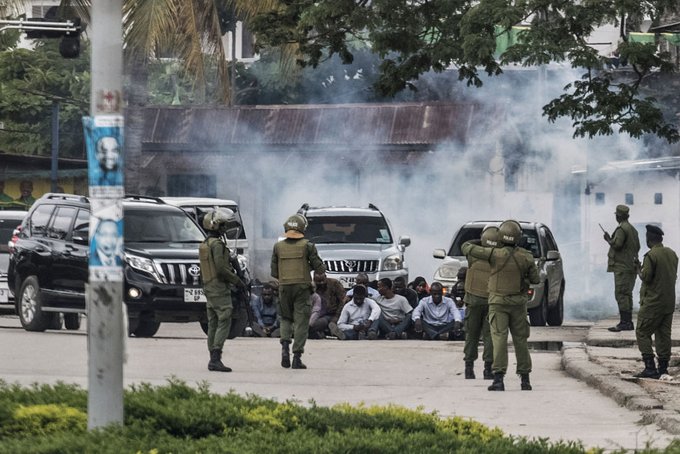
Tanzania’s 2025 general election, held on 29 October, has emerged as one of the most turbulent and contentious in the nation’s recent history. The vote, which determined the presidency, parliament, and local government representatives, was marked by the exclusion of major opposition contenders, widespread unrest, internet shutdowns, and sharp criticism from human rights groups and regional observers.
Voting took place across more than 99,000 polling stations, serving an electorate of approximately 37.6 million registered voters. However, turnout appeared subdued in several urban areas, notably Dar es Salaam, Arusha, and Mwanza. In some districts, polling was disrupted by demonstrations and attacks on electoral infrastructure. Authorities imposed an overnight curfew in Dar es Salaam after government buildings were set ablaze. Civil servants were instructed to work from home as tension mounted and access to the internet remained heavily restricted.


The election’s credibility has been widely questioned due to the absence of the main opposition parties. The leading opposition party, CHADEMA, was disqualified months earlier after refusing to sign a code of conduct, while its presidential candidate, Tundu Lissu, was facing treason charges that he denies. The ACT Wazalendo candidate was similarly excluded after a legal objection from the Attorney General. As a result, President Samia Suluhu Hassan faced only minor challengers, leading critics to claim that the election lacked genuine competition.
Across major cities, protests erupted as voters expressed frustration at what they described as a stage-managed process. Rights activist Tito Magoti remarked that Tanzanians were “rewriting our political culture from being cows, if I use this word respectfully, to being active citizens.” Security forces responded with tear gas and gunfire in several locations. Protesters hurled rocks, set fires, and clashed with police, resulting in injuries and unconfirmed fatalities.
Amnesty International warned before the election that it risked becoming “a procedural affair devoid of legitimacy.” The organisation cited increasing arrests, intimidation of journalists, and restrictions on civic space as key indicators of democratic regression. Another Tanzanian activist described the vote as “a sham election,” reflecting a growing sense among citizens that the process had been orchestrated to maintain one-party dominance.
Regional and continental observer missions, including delegations from the African Union, the Southern African Development Community, and the East African Community, monitored the election. The AU mission, led by former Botswana President Mokgweetsi Masisi, stated that it would evaluate the process in line with continental electoral norms. The SADC mission, under Richard Msowoya, called for peace and restraint, urging all parties to respect democratic standards. However, observers acknowledged that the political environment was tense, with limited space for opposition activity.
The government defended its handling of the polls. The Independent National Electoral Commission insisted that voting was fair and orderly, and that logistical and security measures were necessary to safeguard citizens. Authorities maintained that restrictions on movement and communication were temporary and intended to maintain stability. Provisional tallies broadcast by state media suggested a commanding lead for President Suluhu, but independent observers questioned the accuracy of these figures and the transparency of the tabulation process.
In the days following the vote, protests persisted in several cities. Police were reported to have fired tear gas to disperse crowds in Dar es Salaam, while similar confrontations occurred in Arusha and Mwanza. The partial internet blackout complicated verification efforts by journalists and independent monitors. Several foreign governments and airlines issued travel warnings as the situation remained volatile.
Tanzania has been governed by the Chama cha Mapinduzi (CCM) party since independence in 1961. President Suluhu, who took office in 2021 following the death of John Magufuli, initially gained international recognition for easing restrictions on media and opposition groups. However, recent developments suggest a reversal of that openness. Critics argue that the 2025 election reflects a return to authoritarian tendencies, where the semblance of democracy masks a tightly controlled political landscape.
Regional observers are now preparing their preliminary reports, which will assess whether the election met regional and international standards. Key factors under scrutiny include the transparency of vote counting, equal access for all candidates, and the protection of civil liberties. Human rights organisations are also calling for independent investigations into alleged abuses during the protests and in the pre-election period.
The outcome of this election will significantly shape Tanzania’s political and economic trajectory. The government’s ability to manage post-election tensions, uphold the rule of law, and restore public trust will determine whether Tanzania reclaims its image as a stable democracy in East Africa, or slides further into the pattern of controlled politics that many citizens fear has returned.
In the coming weeks, the world will be watching closely, not only for official results, but for signs that Tanzania’s institutions can rise above political pressure to deliver transparency, accountability, and justice.






![President William Ruto flanked by Environment CS Aden Duale. [PCS]](https://newstrends.co.ke/wp-content/uploads/2025/02/President-William-Ruto-flanked-by-Environment-CS-Aden-Duale-PCS-768x480.jpg)