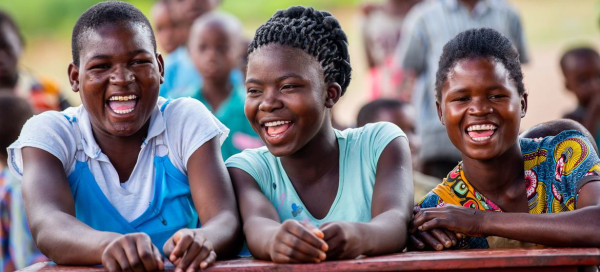
The Central African Republic (CAR) has ratified the Maputo Protocol, becoming the 46th African Union (AU) Member State to adopt the landmark treaty designed to protect and promote the rights of women and girls. The move, formalised on 29 July 2025, signals a renewed commitment by CAR to advance gender equality and strengthen legal protections for women in a country long marred by conflict and instability.
The Protocol to the African Charter on Human and Peoples’ Rights on the Rights of Women in Africa, widely known as the Maputo Protocol, was adopted in 2003 by the AU. It is considered one of the most comprehensive international frameworks for women’s rights, addressing issues such as gender-based violence, reproductive rights, child marriage, female genital mutilation, and equal participation in public life.


CAR’s ratification comes against a backdrop of widespread sexual and gender-based violence, weak governance, and cycles of displacement that have left women and girls disproportionately vulnerable. By endorsing the treaty, the government has pledged to eliminate discriminatory laws, enact policies to safeguard women’s rights, and provide survivors with justice and support.
“This milestone is the result of considerable efforts by government leaders, women’s rights advocates, and regional partners. It is a powerful testament to what we can achieve through collaboration to advance the rights of women and girls,” said Barrister Yveline Ntanfai of the Women’s Counselling and Information Centre (WCIC), a member of the Solidarity for African Women’s Rights Coalition (SOAWR).
SOAWR, a network of more than 70 organisations across 33 African countries, played a pivotal role in pushing for ratification. In June 2025, the coalition led a mission to CAR alongside local and regional partners, where government officials, including Minister for Gender Promotion, Women’s Protection, Family and Children, Dr. Marthe Augustine Kirimat, expressed commitment to adopting the Protocol.
Dr. Tom Mulisa of the Great Lakes Initiative for Human Rights and Development (GLIHD), another SOAWR member, noted, “The CAR mission demonstrated the resilience and strength of women and girls to advocate for their rights. It proved that civil society can effectively engage government institutions to achieve a shared goal.”
The Maputo Protocol has already influenced legal reforms across Africa, with courts in 11 countries referencing it in 26 landmark cases between 2019 and 2024, according to Equality Now. Advocates stress that its full implementation remains crucial for meeting the 2030 Sustainable Development Goal on gender equality (SDG 5).
However, campaigners caution that progress cannot be taken for granted amid a global backlash against women’s rights. In The Gambia, for example, legal efforts are under way to overturn the ban on female genital mutilation, raising concerns about regression.
Esther Waweru, Senior Legal Advisor at Equality Now, emphasised, “The Central African Republic’s ratification of the Maputo Protocol sends a powerful message that progress on women’s rights continues. But it must not stop here. We urge the remaining AU Member States to ratify and fully implement the Protocol so that no woman or girl is left behind.”
As CAR joins the majority of AU countries in ratifying the treaty, attention now shifts to implementation, with civil society organisations calling on governments to translate commitments into concrete legal reforms and policies that ensure equality, dignity, and safety for women and girls across Africa.