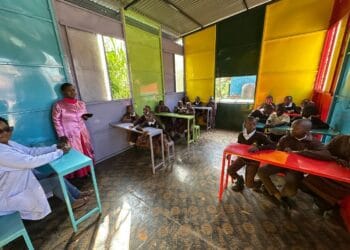
A just released State of Education in Kenya report has identified lack of adequate staffing, ICT, Science facilities and related Physical infrastructure including ablution and sanitation blocks as some of the major challenges hampering education development in Kenya.
Alongside these factors, the report also identifies capitation for public schools as a major drawback to delivering effective education outcomes.


The report developed by Zizi Afrique Foundation and Usawa Agenda seeks to highlight existing opportunities, challenges and gaps to provide practical strategies, partnerships, and policies that can empower teachers and learners, bridge the digital divide, and education financing in Kenya to ensure a just and sustainable education transformation.
The report established that Kenya has a significant staffing shortage of approximately 100,000 teachers across all learning institutions from Primary and Junior schools, Secondary schools and Teacher Training Colleges countrywide.
According to the report, there are existing infrastructure gaps in Kenyan schools; with more than twice the recommended number of learners using one toilet, across rural, urban, public, private institutions. The national average is 66boys:1 and 62girls:1 washroom while the recommended ratio by the Ministry of Education is 30 boys:1 washroom and 25girls:1 washroom.
Speaking at the report launch, Dr. John Mugo, CEO, Zizi Afrique Foundation noted that: “In terms of infrastructure, we have basic Water, Sanitation, and Hygiene (WASH) needs, and emerging needs arising from the new learning areas under the CBE curriculum that necessitates laboratories, technology access and digital literacy for both our leaners and teachers.”
In terms of Technical and Vocational Training Colleges, the steady increase in budgetary commitments over the last decade (KES 14.2 billion in 2023/24) has led to a growth in institutions reflected by a 35.7% increase between 2018/19 and 2022/23. However, these institutions face a staffing shortage (9,121 trainers), infrastructure, training equipment, ICT integration, capitation, and scholarships.
From an Early Childhood Development Education (ECDE) perspective, the report notes that this is a devolved function to the county governments, with the national government providing policy, curriculum, and strategic support. There is a 5% increase in enrolment between 2018 and 2021, informed by the increase in ECDE centers countrywide from FY 2022/23: 46,623 (31,757 public, 14,866 private) to FY 2023/24: 47,666 (32,461 public, 15,205 private), however this is against a backdrop of teacher reduction from 92,359 (2019) to 69,561 (2022).
“While the increase in early childhood development education is positive, the devolvement of this function to the county governments means a lack of standardisation in the quality and access to early childhood education across the country. Our research shows that children out of ECDE going age that are out of school in Mandera is 51.4% and Marsabit 33.3%, which is the lowest access, while Kisumu is 1.3% and Nakuru is 1.8%, the highest access.” Said Dr. Emmanuel Manyasa, Executive Director, Usawa Agenda.
An assessment of primary schools indicates low inequitable learning outcomes with findings indicating that only 4 in 10 Grade 4 learners could read & comprehend a Grade 3-level English story. Learners in Arid and Semi-Arid Lands (ASAL) & rural areas underperform those in non-ASAL & urban areas, case in point is North Eastern region where only 2 in 10 grade 4 learners could read & comprehend a Grade 3-level English story.
In realisation of the need to have a skilled digital workforce, the Competency-Based Education (CBE) has included digital literacy and coding in elementary school. In view of these changes, teachers should be adequately prepared with knowledge, skills, and attitudes to effectively teach these new technologies. According to the report as of December 2024, only 21% of teachers in public junior schools were trained in STEM learning areas with 35% of the schools without a single STEM teacher; only 48% of learners in public junior schools had access to laboratory facilities. Subsequently, Teachers Service Commission hired new teachers with an emphasis on STEM in January 2025.
The report calls for a robust collaboration framework that allows communities, the private sectors, development partners, civil society and other actors to play a significant role in contributing to the public education resourcing and management in Kenya.