Kenya’s political class hit a new low this week, and not in policy, not in ideology, not even in the usual partisan brinkmanship. What the country witnessed was a collapse of basic decency at the very top.
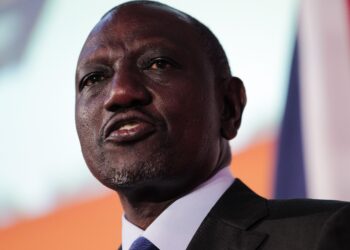
In an extraordinary and deeply troubling exchange, William Ruto and his former deputy Rigathi Gachagua traded insults that veered from personal attacks to explosive, unverified allegations. This was not a political debate. It was a spectacle, raw, unfiltered, and unbecoming of the offices they hold and once shared.


It began in Kiambu, where Gachagua mocked the president’s physical appearance, suggesting he had become so thin “hata masikio inafanya nini.” It was a crude jab, body-shaming dressed up as political rhetoric. But what followed was worse.
President Ruto did not rise above it. Instead, he plunged headfirst into the same gutter, hurling accusations of theft and moral depravity. These were not framed as policy critiques or legal claims; they were delivered as incendiary statements in a charged political rally, devoid of evidence and heavy with implication.
At that moment, the presidency, an institution meant to embody restraint, dignity, and national unity, was reduced to a platform for verbal warfare.
And it didn’t stop there.
Gachagua fired back with allegations of historical violence and corruption, invoking painful chapters such as the Kiambaa church tragedy of 2007, while also referencing more recent tensions involving Gen Z protests. These are not casual talking points; they are deeply sensitive national wounds. To weaponise them in a political shouting match is not only irresponsible. It is dangerous.
Then came collateral damage.
Without naming him directly, President Ruto appeared to mock individuals over their physical appearance and eating habits, prompting a sharp response from Fred Matiang’i, who dismissed the remarks as intrusive and irrelevant. The exchange only widened the circle of hostility, dragging more leaders into what had already become a race to the bottom.
By the time Gachagua returned to the microphone with claims about the attempted “theft” of Nairobi Hospital and even Lee Funeral Home, the line between political messaging and reckless accusation had long been erased.
This is not normal. It should not be normalized.
Kenya has endured heated elections, sharp ideological divides, and moments of genuine political crisis. But even in those periods, there has been, at least intermittently, a recognition that leadership demands a minimum threshold of decorum. That threshold was shattered.
What makes this episode particularly alarming is not just the language used, but the precedent it sets. If the president and his former deputy can engage in open character assassination, what signal does that send to the rest of the political class? What does it teach young Kenyans about leadership, accountability, and public discourse?
There is also a more insidious consequence. When leaders rely on insult and accusation rather than substance, they erode public trust. Real issues, economic hardship, unemployment, healthcare, education, are pushed aside in favour of personality clashes and verbal brawls. Citizens are left not informed, but entertained, and at a cost.
Because beneath the spectacle lies a dangerous truth: words from powerful figures carry weight. They can inflame tensions, deepen divisions, and, in a country with Kenya’s history, potentially trigger unrest.
This was not just a bad day in politics. It was a warning sign.
Kenya’s leadership must decide whether it wants to govern a nation or merely dominate headlines. The two are not the same. And if this is the tone that will define the months ahead, then the country is in for a deeply troubling season—one where noise triumphs over nuance, and insult replaces ideas.
The bar has fallen. The question now is whether anyone in power is willing, or able, to lift it back up.