More than 1.8 million children will miss out on learning due to aid cuts impacting Save the Children’s education programmes in over 20 countries from the Democratic Republic of Congo to Syria to Tanzania.

In Tanzania, more than 50,000 children face having their education disrupted or completely stopped due to aid cuts, with one headteacher in a refugee camp in the country’s north-west saying this was having “heartbreaking consequences” for children.
Headteacher Isack said that attendance rates, dropouts and academic performance at the school have worsened as funding cuts mean children no longer receive free notebooks while girls cannot be provided with the sanitary pads they need to attend school.
Maria*, a refugee from Burundi and a student at Isack’s school, said: “I want to study, I want to be a doctor, but without the right materials, it feels like I’m losing the fight. When we are given tests, only a few of us can do them because many don’t have notebooks. It feels unfair, but what can we do?”
Tanzania is one of 20 countries where Save the Children’s education programmes will be affected unless urgent funding is secured as governments cut foreign aid budgets. In 2024 Save the Children’s education programmes directly reached over 7.6 million children in 60 countries, including children facing conflict, climate change and other crises.
Sabera*, 14, is among the over one million Rohingya refugees living in the highly congested camps in Cox’s Bazar, Bangladesh, since fleeing the violence in Myanmar with her family in 2017. The Save the Children-supported learning centre she had been attending was closed following the aid cuts which have affected the education of over 2,400 children in Cox’s Bazaar camps and host communities.
Sabera* said: “I liked to study and learn in my classes. I suddenly came to know that the learning centre would stop and felt someone snatch freedom and happiness from me. I thought that after completing this year I would be admitted to the next class which opens a whole new world for me, but that dream is now gone.”
In the Democratic Republic of Congo, over 21,300 children in war-torn South Kivu have had lost access to learning materials and training for their teachers. In Syria’s Al Hol Camp, the closure of Save the Children’s two temporary learning spaces have taken away safe spaces for education and mental health services for 640 children who face high levels of child labour and violence.
Across the sector, as little as $7.2 million might remain of over $1 billion of US funding for global education, [1] while cuts by the UK could see at least a 73% drop in real terms in funding to education from 2019 levels, according to Save the Children analysis.
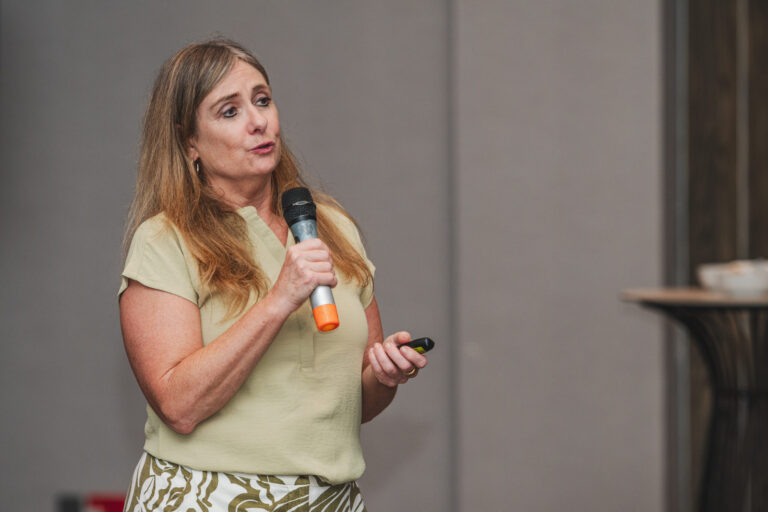
Susan Nicolai, Save the Children International’s director of education, said:
“Every child has the right to education and these cuts to education funding threaten to take away one of the most powerful tools we have to transform children’s lives.
“In crisis contexts, more children need lifesaving aid than ever before and education in emergencies is truly lifesaving. It protects children in a safe space and provides a sense of stability as well as lifesaving learning such as how to stay safe from unexploded bombs or prevent the spread of disease.
“Foreign aid is about hope, peace, and creating pathways to a better future and education is the epitome of a ‘long game’. We are witnessing the start of generational learning and developmental setbacks that will reverberate through communities and families for years to come.”
Today, nearly 400 million primary school-aged children – or about half of primary school-aged children – cannot read or write and more than half of all three to 6-year-olds lack access to preschool, according to World Bank data.[2]
In some humanitarian and conflict settings, where Save the Children is often the sole education provider, the situation is even worse. Children in refugee and displacement camps will not only lose schooling but also critical support like food, mental health services, and safe spaces. Children, parents and caregivers have repeatedly told us that education is a top priority, including in crises.[3]
Save the Children is calling for world leaders, partners and all donors to financially invest in children and their futures. The humanitarian and aid sector will be forever changed by these rapid decisions to cut funding. but Save the Children is committed to working with global leaders, institutions and civil society to reform the system and to help create a fairer, more stable global financing system to care for those most in need.
Distributed by APO Group on behalf of Save the Children.